Benromach 10 y.o. Review

This style of malt has huge appeal for me. I may have used this analogy before in some other context, but a whisky like this is a coelacanth. In other words, a Lazarus. A dead style, come to life again long after we thought we’d kissed it goodbye. That analogy applies both to the distillery and the style. Benromach was Gordon & MacPhail’s first foray into distilling and distillery ownership, while the style is sadly anachronistic in this day and age.*

When G&M reopened Benromach in 1999, after a near 16 year closure, their aim was to produce a 1950s style Speyside malt. You know what that means, aye? Bingo! Peat. It’s a different dimension added to a familiar style, and one that works extremely well against such a rich and robust spirit.

If what I’ve read is correct, Benromach is peating to about 12 ppm. Not high, by today’s metrics, but substantial enough that phenol-phobes will definitely be turning a nose up at this one. Irrespective of the actual numbers, the smoke is an omnipresent entity, weaving its way through all other nuances and flavour notes. And for my tastebuds…it works beautifully. Is the 10 a knock-out? Nah, of course, not. But it is really, really good. And as close to a knockout as you can get at this age and price.

I also want to add that the more mature malts under the new ‘romach regime are already showing signs of being something very special. This is the sort of whisky I want to drink at about thirty years of age or so. I think that’s where it will really shine.

Shame about the 43% bottling strength, but we’ve already harped on G&M’s propensity for these ‘no man’s land’ abv’s, so let’s move on.

43% abv

Tasting Notes

Nose: A light smokiness, as we’d expect, knowing what we do about Benromach. Oil lamps. Unbaked pastry shells. Wind over hay fields (I know, I know…settle down, Auden). Warm suede and polish. Orange marmalade and orange juice. Berry compote. Toasted almond.

Palate: Gentle earthy, peaty notes, with threads of clean smoke and toasted oak. Warm leather (horse saddle? And no…I’ve not licked saddles). More orange, vibrant and lovely. Citrus pith and rind. Dusty wood. Hints of corn (think dried stalks, unbuttered popcorn, etc). Vaguely nutty.

Finish: Mid length. Slightly tannic at the back end. All pleasant.

Thoughts: Any day, any time. Adore this style. And not just this style; I adore this dram. One of the best 10 year olds on the market.

89/100

*Yes, I’m aware Ardmore is much in the same camp, though they’ve been consistent about it for a very, very long time, and in this guy’s humble opinion, lack the multifaceted profile.

Macallan 18 y.o. Triple Oak Review

Oh, man. I really don’t relish talking about Macallan much these days. It kinda feels like picking on a very weak bully, if that makes any sense. Macallan is more of a monolith than ever before, but at the same time it’s but a shadow of its former self. I find it increasingly difficult to reconcile the contemporary profile of the brand with those massively sherried, brooding old beauties from past decades. The lack of decent sherry butts plays its part, of course, but let’s also shoot the elephant in the room while we’re taking aim: the prices being levied against any Macallan that breaches that 18 year mark are bloody offensive. Marry that concern to the amorphous flavour profile that neither adequately reflects what Macallan has always been about, nor does it any favours, and…well…it’s hard to love this great old icon with the same zeal I did in earlier times.

So, as I said…I don’t really like discussing Macallan. Mama always said ‘if you can’t say anything nice…’ And you know where it goes from there.

Triple Cask. Three wood types. Okay. Nothing really innovative here, but I can’t lie: seeing the word ‘sherry’ on the label makes me grit my teeth. Because with Macallan, it rarely seems to stand in isolation. Inevitably these days, ‘sherry’ is being chased by the word ‘seasoned’. You know what that means, aye? Sherry Lite; just a suggestion of what we hope for in our Macallan, due to little real wood penetration (minds out of the gutter, kids!). And the resultant whisky here, even at 18 years, is about as exciting as a lukewarm bowl of Cream of Wheat porridge. Is it bad? Nah. But neither is it really good. Certainly not good enough to justify that nearly $350 price tag anyway. At $150 or $180? Maybe. Maybe.

43% abv

Tasting Notes

Nose: A fairly pronounced spiciness, right out of the gates. But almost like cinnamon, nutmeg and cocoa powder stirred into cream or custard. Still sorta floral and perfumed. Caramel cake with candied nuts. Lemon and honey. Spanakopita. Soft toasty notes.

Palate: Quite sweet and almost syrupy, despite its anemic body. Terry’s Chocolate Oranges. Cinnamon sticks. Hints of chomping on an unlit cigar. Just suggestions of mince pies. Slightly wine-y actually. And a bit flinty. Nose was more interesting than the palate, if I’m being honest.

Finish: Slightly tannic. More oak and vanilla than I hoped for at the back end. Shortish.

Thoughts: Credit where credit is due, though: there’s a decent balance struck here. And while 43% is better than 40%…46% would have been much more to my liking.

86.5/100

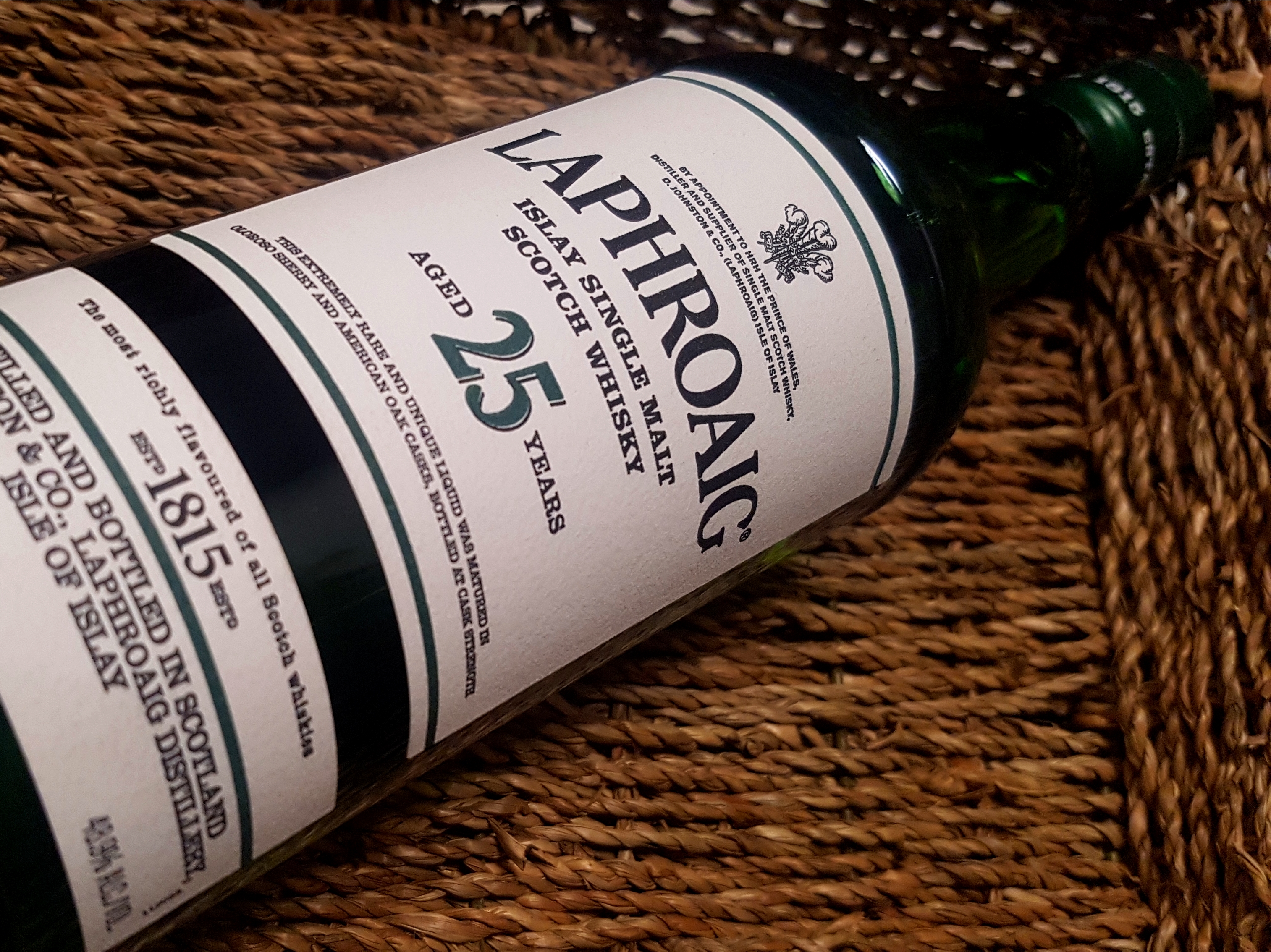
Laphroaig 25 y.o. (2017) Review

A perpetual favorite of mine and most (errr…all) of my mates ’round here. And it might actually be my favorite 25 year old distillery bottling on the market, now that I think about it. Laphroaig 25 is always the perfect marriage of dead peat (i.e. faint and faded with time) and soft fruits, tiptoeing towards the realm of tropical. I know some folks out there are looking for the coal fire wallop of young phenols in every glass they pour, but the truth of the matter is that Laphroaig is one of the most spectacular malts out there if left alone for a couple decades in good oak.

This is the 2017 edition, and I believe it’s as the others: a mix of bourbon and Oloroso casks. Either way, it works a right treat. I don’t think we need to say much more.

48.9% abv

Tasting Notes

Nose: Soft smoky undertones. Lime, melon and mango. Pineapple and chest rub. Threads of white and milk chocolate. Skin-on almonds. Just a faint ammoniac barn-ish smell. Iodine (this is Laphroaig, after all!). Oysters. Kinda…sooty and charry. Wine gums. Dead flowers. I love how this one opens up.

Palate: Salt water taffee and black licorice. Cola cubes. Cantaloupe and grapefruit. A bit flinty, with a nice olive brininess. Oily vanilla. Heavy cream on a bowl of citrus fruit wedges. Grilled pineapple. More of that eucalyptus. Coriander. Grilled whitefish. Ahhhh…that grapefruit tartness; love it.

Finish: Clean and vibrant. Good, lengthy fade. Leaves Granny Smith apples, lemon and smoky grist notes behind.

Thoughts: As I said, a perpetual favorite, held to incredibly high standards. And fortunately, always seems able to rise up and meet them. Can’t help but think that maybe one less butt and a few more bourbon barrels in the vatting would have taken this up a couple points.

89/100

Striking A Balance

Ever heard that expression ‘if you try to be everything to everyone you’ll end up being nothing for anyone’? That’s sort of what I’m struggling with here on ATW right now. Readership is understandably low coming off a very lengthy hiatus – which means there isn’t much of a barometer to gauge opinions – but I’m doing to my best to tackle a bit of everything here. That was always the game plan and I like to think that, throughout the years, I’ve done just that. I’ve drunk rotgut and scored it limbo-low, and sipped 70 year old drams that would make your accountant’s eyes roll back in his or her head.

Believe it or not, the easiest drams for me to source are those that fall in the mid zone. Couple hundred up to about a grand. Those at the lowest price points are scarce in my circles, simply because neither me nor my friends are buying them. And those at the top…well, I do get to try quite a few, but they’re far from everyday treats. Fortunately, my job allows me access to so much more than simply what I secure myself. Hopefully I’m getting at a bit of what everyone wants to see.

The reality is, though, that there is almost certainly a much wider audience for a review of an Oban 14 than there is for, say, a 1966 Banff. The latter is fun to read about for context and historicity, but the former is what aids in buying decisions for some. And I think, aside from a virtual social engagement, that’s what most use this site for. I think you guys and gals know me by now, though. It’s the scarce and storied malts that really light me up. They tend to be in very limited allocation and they tend to be pricey. ie. Not for for everyone.

But the problem is that notes on so many of these brilliant old and rare drams will never see the light of day. There are legions of hoarders out there who will never open these bottles, collecting showpieces as opposed to collecting the memories associated with the experience of sharing them. And that’s fine. No judgement. (Okay…maybe a little) But if I can use this as a platform for getting more info out there, I will. It gives perspective, if nothing else. And keeps my batteries fueled for the other stuff in life that is less enjoyable.

As I said, though…reviews of that nature target a very select audience: those with pockets deeper than most of us will ever have and those with a bent to masochistic and vicarious participation. In other words, the geeks who can afford ’em and will buy ’em, and the geeks who simply devour every word about the most complex spirit in the world. I recognize that some of the site’s content could be construed as pretentious. I guess there’s no getting around that.

But let’s continue to fight the good fight together. You let me know what you want to see on here and I’ll try to make it happen to the best of my ability. And hopefully I can continue to walk the line between archiving notes on grail malts and sharing the word on the daily drinkers. Because they all deserve their day in the sun, aye? And who knows? With the bubble reaching (arguably) its apex position, its not only possible but probable we’ll see it pop (or at least deflate a bit) and perhaps the gap between these points will close a bit. Food for thought for another day, though: careful what you wish for. It would not be a good thing to end up where we were back in the late 1800s. Or the 1920s. Or the 1980s, to speak to a bit of more topical time.

Much love…

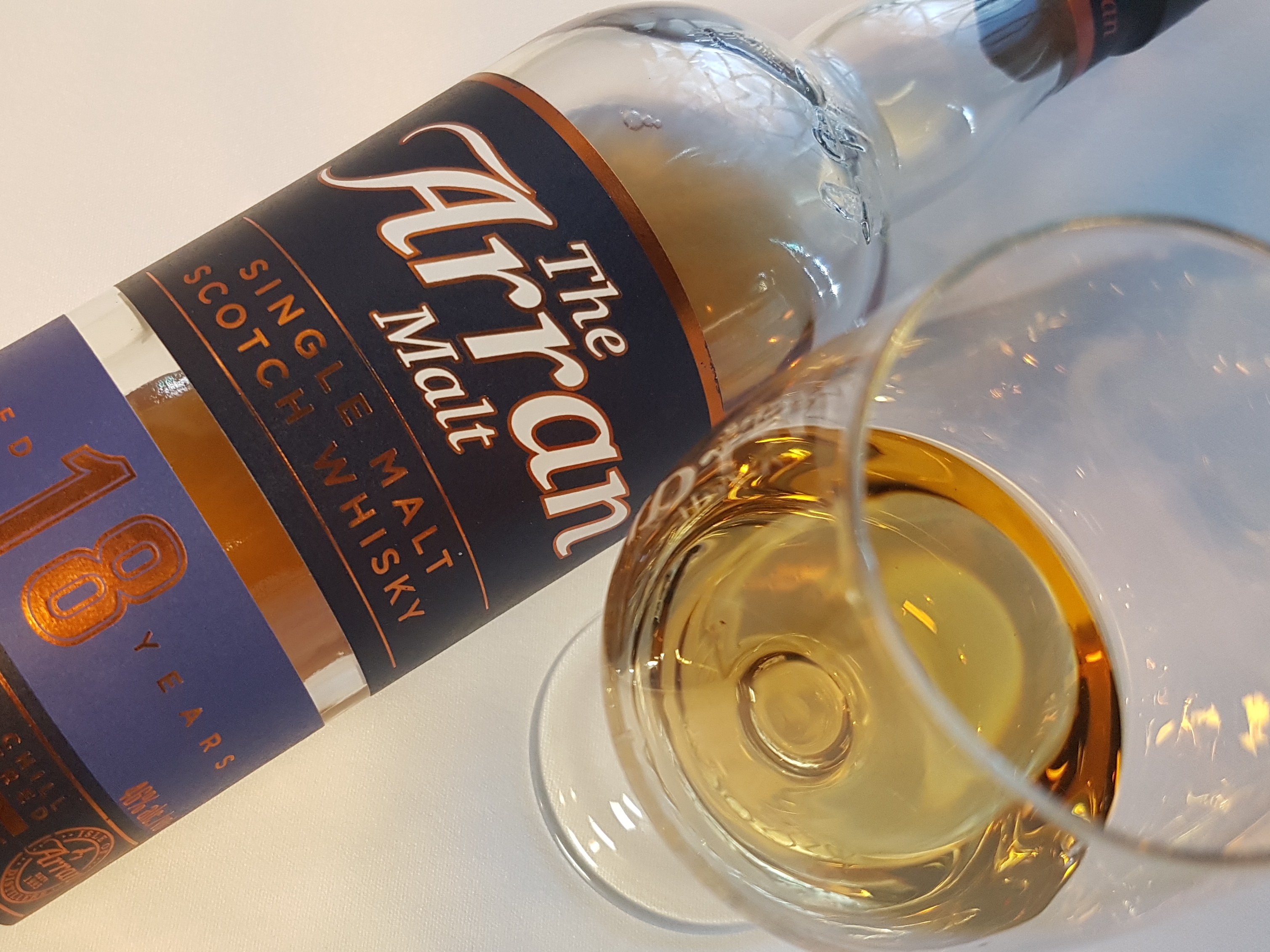
Arran 18 y.o. Review

Not only have there been requests to write up a few Arran malts, but there is an absolutely rabid following for the stuff around here. Part of that loyal fanboy and fangirl-ism, I honestly believe, can be laid at the feet of Kensington Wine Market here in Calgary. (And yes…I work at KWM. But you knew that, aye?) Twelve bespoke casks of Arran have been brought into the store over the past few years. Twelve. And having sold through all but the last handful of our most recent acquisitions, I think we can safely say that, at the very least, we’ve helped cultivate the adoration.

The icing on the cake is that Arran is a ridiculously approachable malt; complex enough that geeks still love it, but sweet and easy-going enough so that even those with little experience can find it a decent gateway dram. The key, though, is that inherent sweetness that defines the distillery character. So, where does it come from? Well…

Here’s what we know (based on info from Scotchwhisky.com): decently lengthy fermentation time (~65 hrs, shell and tube condensers to maximize copper contact; tall stills with long lyne arms (ditto on the copper contact); Kerry M yeast (slightly longer for the yeast to get moving, typically resulting in a more fruit-driven distillate) and a solid wood program that focuses primarily (though not exclusively) on sweet jammy sherry butts and clean active ex-bourbon casks. The malts are nabbing really robust cask influence at relatively youthful ages, without then having to be offered up too young. A nice balancing act, really.

So, what comes out the other end is a sweet, syrupy and ester-driven pile of loveliness. I can’t always drink such a sweet style, but man…what a well-composed spirit. Hard to argue that.

I’ll be heading for the distillery in a matter of weeks. Hopefully I can confirm a few details then. More to come…

Tasting Notes

Nose: This one even noses sweet. Bucketloads of fruit. Sliced apple and berries drizzled in lemon juice. Decent oak structure, without being tannic. Some sherry in here too? The suggestion of an unlit cigar sitting behind a vase of week old flowers (you’ve lost the plot, ATW!). Pineapple and mandarin. Lemon meringue pie, with toasted meringue. Plantains.

Palate: Juicy arrival. Then big oak. Then an explosion of fruity sweetness. Apple and orange with a squeeze of grapefruit. Dried papaya slices. Mashed banana. Pineapple flan (flan de pina). A decent amount of citrus again. Danish pastries. Orange ju-jubes.

Finish: Clean and dominated by fruit skins. Lemon popsicle, especially the stick afterwards.

Thoughts: Nice balance here, if a wee bit sweet for my tastes. I do like the fruits here, edging into tropical territory.

87.5/100

GlenDronach 1990 22 y.o. Cask #2971 Review

The future of GlenDronach is still very much up in the air, as far as I am concerned. The sale to Brown-Forman may be history now, but like all big events, there are always echoes through time that are going to have an impact on all that follows. Here in Canada, Calgary in particular, we are still struggling to keep decent stocks of BF’s inherited portfolio on our shelves. Especially as relates to the more interesting SKUs (15, 18, 21, batch releases, etc). And the elephant in the room, of course, is pricing. I don’t really care to delve into that debate at the moment, but trust me when I say it has not been a transition that has benefited the consumer.

Back in 2012, when Bruichladdich sold to Remy Cointreau, we were all nervous that there would be a ‘dumbing down’ of the range. Assurances were made from on high that this was a non-issue, and that Remy was keen on the Laddie model as it stood. Said model, in fact, was one of the considerations that led to such an easy decision for Remy to purchase the brand in the first place. And while Bruichladdich seems, on the surface, to be continuing status quo all these years later, there are simply no two ways about it: there are far less facings of the Islay renegade’s product available now than there have been in years. Remember those glory days of entire shelf sections virtually groaning under the weight of the Bruichladdich tin? Sadly…those days are gone. But…Laddie does get a pass from me. Because quality remains uniformly high and pricing has been held in the sphere of relative sanity. Having said that…we’ll be watching the brands Billy Walker made famous (BenRiach, GlenDronach, Glenglassaugh) very closely in the coming years.

Last night my mate Dave cracked open this 22 year old ‘Dronach for a privileged few at my place. It followed on the heels of a 2009 Brora 30 year old I’d poured and, while it couldn’t compete in terms of quality (hey…it’s Brora. What could?), it certainly stole the show in terms of absolute gargantuan personality. This malt is a sticky, syrupy and utterly singular expression of something that, again, is barely whisky. But oh so cool for it.

50.8% abv. Distilled in 1990, bottled in 2013. This PX Puncheon yielded 604 bottles. Part of ‘Dronach’s Batch 8 release.

Tasting Notes

Nose: No real suggestion of sulfur, fortunately. Notes of charred raspberry, with some cherry jam. Cold coffee. Chocolate. Molasses. Hoisin sauce bringing some deep savoury Asian flavours. Licorice. Bovril or OXO. Fig and dry cocoa. Furniture polish.

Palate: Maybe a faint touch of Sulphur now? Maybe? But  honestly, I’m not convinced. And if there is, it’s certainly not enough to spoil. Deep stewed fruits, black lollipops and cold coffee. Charred orange rinds. Licorice. Prune juice. Burnt pastry. More coffee. Tiger Tiger! ice cream. A deep earthiness. Green candied walnuts.

Finish: Stewy and mince-y. Burnt caramel. Everlasting.

Thoughts: Burnt notes, but no…no sulphur here, I think. Beyond big. Fun as hell, but waaaay too much cask influence. The ‘GlenDronach’ is lost.

86/100 (I have a feeling others would score this higher than me due to the novelty of Coca-Cola blackness and near opacity.)

Rosebank 25 y.o. (Cadenhead) Review

Rosebank sorta straddles that barrier between first tier and second tier when people discuss their personal biases and rankings for the much-mourned closed distilleries. No two ways about it, there’s a deep sentimentality out there for this iconic and quintessential Lowlander, but Rosebank will almost certainly never be held in the stead of Port Ellen or Brora. Especially now, as the eve of the distillery’s renaissance approaches. Another factor, of course, is that Rosebank closed in much more recent times than did the ‘Big Two’. Ten years later, to be exact.

But I think more than any other issue at play is simply the makeup of the malt itself. We’re a comparing a relatively innocuous (that’s not to say it wasn’t lovely, and occasionally even spectacular) light and floral dram with the enormity of the massive peat profiles from an era where homogeneity hadn’t yet become the de facto standard. Now, hear me out: brands don’t strive for homogeneity, of course, but when your grand pursuits are yield and consistency, it becomes inevitable that character will be the sacrificial goat. In the ’60s, ’70s and ’80s there were many more variables at play: a ‘by touch’ method of brewing and distilling, inconsistent cask policies, wild west wood policies, etc. Inevitably, this is what led to such fantastically singular casks slumbering away in some of these fossil distilleries we hold in museum piece-like awe. This is the very same reason that Springbank continues to climb the charts in drinkers’ esteem nowadays.

This 25 year old Rosebank is a near perfect example of what the distillery’s ‘house style’ could be considered. And though I still don’t find it a home run dram, I can’t argue the intrinsic quality. It’s there in spades. Lovely dram. One more please.

50.5% abv. From an ex-bourbon barrel that yielded 192 bottles. Distilled in 1991, just two years before the distillery closed, and bottled in 2017 for the 175th anniversary of Cadenhead.

Tasting Notes

Nose: Definitely soft and perfumed. White chocolate and a drizzle of warm honey. Toasted marshmallow. Rosehip. Gooseberry. Pineapple upside down cake with French vanilla ice cream. A very berry-heavy artificial sweetness. Also quite creamy.

Palate: Toasted oak, much more assertive than expected, and almost leaning toward bitter. Grapefruit pith, which also bitters a bit, but in a more pleasant way. Orange, mango, kiwi and lychee (yup, as it says right on the bottle).

Finish: Clean and oak-driven. Rather lovely, if maybe a bit anemic.

Thoughts: Really good example of the style and the distillery, but also a perfect example of why Rosebank will rarely be knock-out whisky for me. Very drinkable (not far off some good old Irish whiskey I’ve had, actually), just not my preferred style. Should also note that it just gets better and better with time in the glass. I probably had it a point or two lower than the score it’s getting before it ‘evolved’ with time.

88/100

Finlaggan Cask Strength vs The Ileach Cask Strength

The Vintage Malt Whisky Company was founded in 1992, and has spent better than a quarter century now releasing independent bottlings, undisclosed malts and blended malt whiskies to the masses eager for a) better prices than the big brands can (or are willing to?) offer up and b) interesting alternatives to the mass market branded sector. And as with any such company, it’s inevitable that you’ll find a plethora of singular flavours and varying levels of quality. Such is the nature of it, especially as regards the single cask stuff.

The company is particularly big on undisclosed Islay whiskies, boasting no less than three unique Hebridean brands in their portfolio in addition to a blended malt that is composed largely of Islay malt as well. Sounds like a bunch of folks after my own heart, doesn’t it? Both The Ileach** and Finlaggan have, at times, been purported to be undisclosed toddling young expressions of Lagavulin, but we all know the nature of these whiskies, aye? With no declaration, and contractual obligations ensuring tight-lippedness, these whiskies could be from any distillery on the island. Not only that, they could be sourced from different distilleries from batch to batch. I guess with a price point as fair as we see here ($75-80 locally), we can’t get too worked up so long as the quality is high. I’ll weigh in with my own guesses on these two at the end of the tasting notes below.

Oh, and by the way…

Ileach is the name given to folks who live on Islay. Finlaggan is the seat of the Lord of the Isles.

**(pronounced somewhere between ee-leck and ee-lack, please! And with a proper throaty Scottish ‘ch’ at the end, if it do ya!)

Finlaggan Cask Strength

58% abv

Nose: Lime and licorice. Peat and smoke, as expected. Very youthful and ester-driven. Also very oceanic shoreline-esque. Minerally, and rich in seaside decay (actually a very pleasant aroma, despite what you might think). Marzipan. Brittle, crispy bacon. Eucalyptus. Prickly, with plenty of licorice. Not overly complex, but for a young’un, I like it just fine.

Palate: Very young. Some untamed new make notes, but no feintiness to be detected, so ultimately…we’re happy. Lemon. A lot of smoke. God…even more of those young citrus notes piling on. Anise. Charred scallop. Toothpicks. A mouthful of ocean surf (like when you bail off a wave and biff it into the deep; and yes…that is the voice of experience, though my surfing days are long behind me now). Burnt kale chips. 

Finish: Granny Smith apples. Oily vanilla pod. More of those charred scallop notes. Long, long, long.

Thoughts: A bit lighter in color; perhaps all ex-bourbon?

86/100

The Ileach Cask Strength

58% abv

Nose: A wee bit of a garbage-y, cabbage-y note at first (Sulphur compounds, but not of the struck match sort). This does sort of off-gas after a bit of time in the glass. Behind that, it’s a bit more syrupy than the Finlaggan. Ardbeggian, even. Or more like Laphroaig 10 Cask Strength, upon reflection. Maybe a sherry butt or two in here? Ashy and sooty. A few drops of orange juice.

Palate: Definitely into young heavily phenolic Laphroaig territory now. Like licking rubber bandages. Black and green wine gums. Green ju-jubes too. Soooo much smoke. Charred citrus peel (and yes…I have tried that), and again… a little bit of orange. Hate to say it, but that strange funk from the nose carries through here too, just milder. I kinda feel that the palate does help redeem the nose a bit.

Finish: Again, uber long. Fortunately that faint sulphuric tinge is MIA at the back end. Unripe Bartlett pears and tannic fruit skins. More lime. Some clean wood.

Thoughts: Meh. S’ok. Definitely an off note to be dealt with. I think (just my two cents) maybe the result of a bad butt in here. (Yes…I realize that sounds like Jim Murray windbag-ism). Previous batches have been better. I think I’ll stick with the Finlaggan.

81.5/100

If I had to guess blindly? Finlaggan = Caol Ila. The Ileach = Ardbeg. I’m sure that’s not the case, but such is the way it goes with super young Islay malts: they’ve often yet not grown into the face they’ll wear later.

Caperdonich 39 y.o. (Cadenhead) Review

Extra! Extra! Read all about it! Dead Distillery Births Live Monster of a Whisky!

Yep. This one really is a true monster of a whisky. And I mean that in all the right ways. Towering, monolithic, hideously beautiful. This takes the concept of subtlety and pounds it into a bloody pulp of submission. And it’s that paradoxical contrast of refined maturity and overt, beastly aggression that makes me slaver over it.

I should be forthright and confess my personal bias here, so you know to take my score with a grain of salt. I love malts like this. They’re over-the-top, far from balanced, and almost not even whisky anymore. They’re also an utterly fantastic and welcome deviation from the mainstream. Shame about the price point (tickling the four figure mark), but it is fair. Relatively speaking, anyway. Caperdonich is, after all, shuttered for good, and the stuff in the glass is almost four decades old. If the occasion arises, do not miss out on this one.

In terms of drinkability…a slow, deep contemplative sipper.  A heavy, one-and-done, take-your-time kinda dram.  In terms of true appreciatibility (yes, I sometimes make up words; what of it?)…a near priceless glance at a bygone era.  The sort of malt I get sentimental about.

50.4% abv. 462 bottles.

Tasting Notes

Nose: Deep and rich and beautiful. And 100% over-sherried, but I love it for that. Polished wood. Old Cognac or Armagnac. Orange oils and morello cherries. Dunnage and old libraries. Rancio. Oily, dried tropical fruits. Sandalwood. Marzipan. Very high end dulce de leche. Licorice. Quite savoury, actually. A distant whiff of smoke.

Palate: Waxy with notes of old polish and that fine old Cognac or Armagnac again. Dried mango, fig, cherry and papaya. Kirsch. Apple skins. More of those savoury notes threaded through with a bit of mince. Moist trail mix (nuts, chocolate, dried fruit). All Sorts and Eat More bars. Tastes…well…old.

Finish: Long and pleasant. Less oaky than expected. Nice, slow-drying fruitiness, bordering on tannic, but not quite.

Thoughts: Alright, maybe a little long in the tooth, but this style works for me. It’s not a regular go-to type bottling (even if the price was lower), but it is a hell of an occasional experience. Ahhh, who am I kidding? I’d drink this anytime I was offered one.

92/100


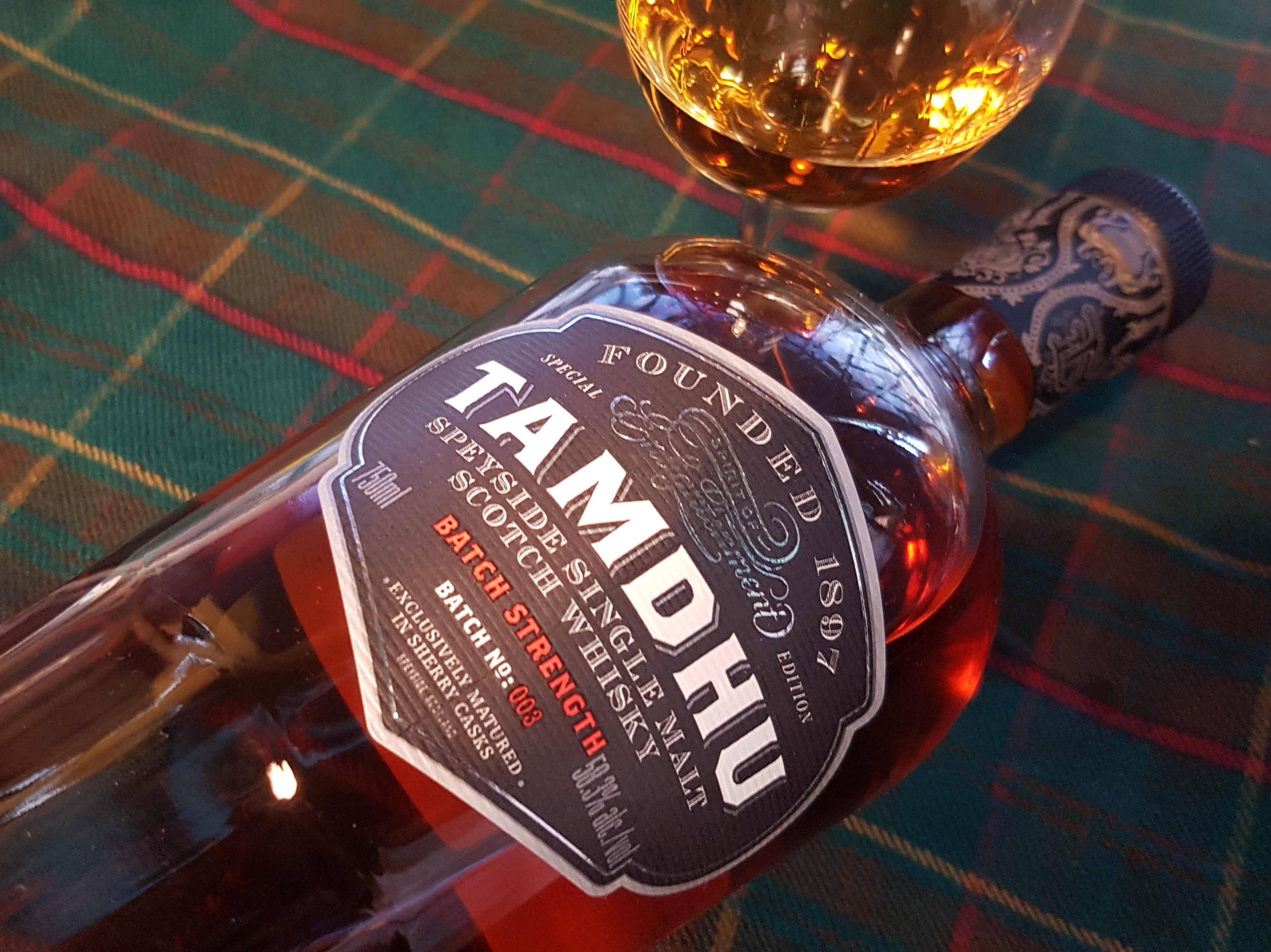
Tamdhu Batch Strength Batch No: 003 Review

Poor man’s Aberlour a’bunadh? Maybe. Maybe not. In terms of personal preference and local price point, yeah, I guess it would qualify as such, but the reality is that Tamdhu Batch Strength is more like a savoury variant of the big, bold and youthful sherry bomb that Aberlour took to the mainstage a wee while back when they launched a’bunadh. It’s great to have options, innit? And it’s even better to have options that come in $35 lower than said Aberlour. (a’bunadh is now $140 in Alberta! WTF happened there?!)

Most of the Tamdhu I’ve had thus far has been much older than this one, mellowed by a couple decades in wood and allowed to soften into something cool and complex. Especially those gems from the ’60s and ’70s. Wow! This beast, though? Never in a million years would I have pegged this as Tamdhu. The style is loud to the point of distortion. Distillery character is almost lost in favor of (obvious) wet-fill sherry casking. This sort of intensity is almost like sipping the syrupy eau-de-vie out of a jar of griottines. A one-and-done per night sort of dram for me.

All said…quite nice. Won’t have the complexity, depth and age that seasoned drinkers generally look for in their malts, but definitely serves as an occasional bombastic treat and will certainly light up the noobs.

59.3% abv

Tasting Notes

Nose: Spicy mince. Ginger bread with kirsch baked right through it. Or maybe it’s Chambord. Berries or tree fruit either way. Quite figgy. Damp cedar. Melting chocolate and new leather. Tobacco. A floral note runs through the middle as well. Caramel-y, fudge-y notes. Freshly made cinnamon buns before they hit the oven.

Palate: Jaysus! This is hot. Big sweet and spicy arrival. Lots of tree fruits and berries. Ginger and cinnamon. Peppered berries. Big, bold and spicy oak notes. Hints of mulled wine and cold tea. A little bit of licorice, red and black. Reminds of Christmas.

Finish: Just slightly tannic, but overall very juicy and man…does this one linger. Eventually tightens up into cranberries and red popsicle (still on the stick).

Thoughts: Definitely not one of those antique-y styles of old school sherried malt we love so much, but still exciting. I’m not generally a water-in-my-whisky kinda guy, but something this young, this spicy and this high strength will absolutely take a decent dollop of water and survive. She’s a feisty ‘un. And I have a bit of a crush on her at the moment, despite the fact she’s not my preferred style.

87/100