Category Archives: Whisky Reviews & Tasting Notes

Highland Park 16 y.o. Review

Highland Park 16 y.o.108

40% abv

Score:  87.5/100


I’ve heard some rather mixed thoughts on this one.  Perhaps ‘mixed’ is the wrong word.  None of the watercooler gossip seems to be disparaging, but all of it makes this one out to be rather…mundane, or lacking in personality at the very least.

Hmmm…respectfully, I think I’ll dissent.  This is a very, very enjoyable dram.

While seemingly much more restrained than Highland Park’s usual fare, this one still carries that heavy floral honeyed note HP is so famous for.  The mild, but omnipresent, smoke and peat that usually permeates Highland Park is, if present at all, merely an afterthought here in this 16 year old.  The fruits make me think this one’s pulling the cougar act; telling you she’s one age, but actually maybe a little bit more mature than letting on.  That’s ok, though.  That sort of dishonesty in age is acceptable in malts and MILFs.

40%, huh?  Hmmm…why?  Wonder why the team at HP would elect to neuter this one to such a degree when most of their range is 43% and higher.  Let’s not get worked up about it.  We still like this one.  Like a stone that’s spent a healthy amount of time in a rock tumbler; smooth and polished.  Aesthetically appealing all around.

Nose:  Honey.  Cherry.  Heather.  Pepper.  Creamy vanilla and scones.  Some light latex.  Floral notes.  Orange.  Notes that seem a little more mature than 16 years, almost as if there may be an older csk or two buried in here.  Very smooth and round on the nose.

Palate:  Orange again.  Pepper.  Slightly jammy with honey.  Sugar cookies.  Maybe some green tea.  It’s the oak and fruits that linger.

Very, very pleasant.


– Reviewed by:  Curt

– Photo:  Curt

Glenfarclas 40 y.o. Review

Glenfarclas 40 y.o.002

46% abv

Score:  92.5/100


Glenfarclas rocked the whisky world a few years back when they released this stunner of a 40 year old whisky for an absolutely lowball price (less than $500 a bottle).  Kinda made us all stop and question the recent antics of a couple other distilleries that keep jacking prices and marketing their wares as the next uber-whisky.  Won’t name names, but I imagine you know who they are.

Glenfarclas has always been a personal favorite whisky.  High quality output, traditional and old school presentation and great price point.  From young to old, the distillery’s whisky is quite good.  The older releases though – especially the family casks – can be quite the stunners.  Fortunately for us Glenfarclas is sitting on a brilliant stock of very mature whisky.  We should be able to see older releases from this family-run Speyside distillery for ages to come.

Generally with Glenfarclas, it’s expected you’ll get a very balanced, heavily sherried malt.  Caramel and spice-rich, with loads of chololate and raisin.  As a general profile…it’s a delight.  A great building block to build upon through years of maturation.

So the question is…what does 40 years of aging do to a whisky like this?  Will it be too much?  Over-oaked?  Bitter?  Nah…not a chance.  This is a highlight whisky.  One of the best ‘Farclas I’ve tasted to date.

Nose:  Deep and rich.  Some caramel and Glossette Raisins.  Beautiful threads of vibrant jammy notes.  Some orange and cherry.  Paint.  Wow…what a striking balance.  Nearly flawless.

Palate:  Sweet and juicy.  Again…those macerated fruit/jammy notes.  Some chocolate.  Some tobacco.  Some licorice.

This is truly a textbook example of well-aged mature sherried whisky.  Beautiful integration of all elements.


– Reviewed by:  Curt

– Photo:  Curt


Glen Mhor 1982 (Signatory) Review

Glen Mhor 1982 (Signatory)037

56.8% abv

Score:  87.5/100


Glen Mhor is another of the ‘lost distilleries’.  Not a whisky you’re liable to find much of, outside of rather pricey older independent bottlings.

Some of these now-closed distilleries were primarily used in the production of blend components, so if we’re speaking honestly, are not always 100% up to snuff in being considered for bottling as single malt.

Some though, are tasty indeed, and well worth the effort of tracking down.  Glen Mhor?  Hmmm…maybe.  Maybe not.  I’d say ‘why the hell not?’ though.  It is, after all, a piece of history and, if the opportunity presents, a chance to taste whisky as it existing in days of old.

If the name of the distillery rings familiar, it is likely due to the fact that it was one of the mature ‘old school’ style malts that was used by Richard ‘The Nose’ Paterson in his recreation of the Mackinlay Shackleton whisky in 2011.  In needing something a little older, and bearing a more vintage profile, Paterson opted for this vaguely smoky, somewhat malty whisky to prop up the younger malts in his masterwork.  Logical really.  Glen Mhor was a core distillery used in the original blended Rare Old Highland Malt, which the replica was based on.

The distillery itself was situated in the Northern Highlands…Inverness, to be exact.  Neighbouring the infamous Loch Ness.  Sadly, any tour of the region (for those hopeful of sighting the beast), will not include a tour of Glen Mhor.  The distillery was leveled in 1986.  Nowadays it is the site of a shopping center.  Not a fair trade, really.

I have only tried a couple of Glen Mhor to date, so I can’t really speak to the distillery’s general profile, but I can share a few thoughts on this one.  This particular expression is from a wine-treated hogshead.  It was distilled in 1982 and bottled in 2010 from cask #1328, effectively making it a 28 year old single malt.  One of the last distillates before the distillery closed its doors in 1983.

Anyway…the verdict?  Quite good.  Not great.

Nose:  Seems younger than 28 years.  Floral and weedy.  Spices leeched from the cask.  Bit of pepper.  Old cask (dry oak).  Raisin and bitter mincemeat/fruitcake.

Palate:  Still mincemeat.  A little more dried fruits.  Very tannic and drying.  Almost meaty…almost savory…almost smoky.

Thanks to Andrew Ferguson at Kensington Wine Market for the sample of this one.  Appreciate it, mate.


– Reviewed by:  Curt

– Photo:  Curt

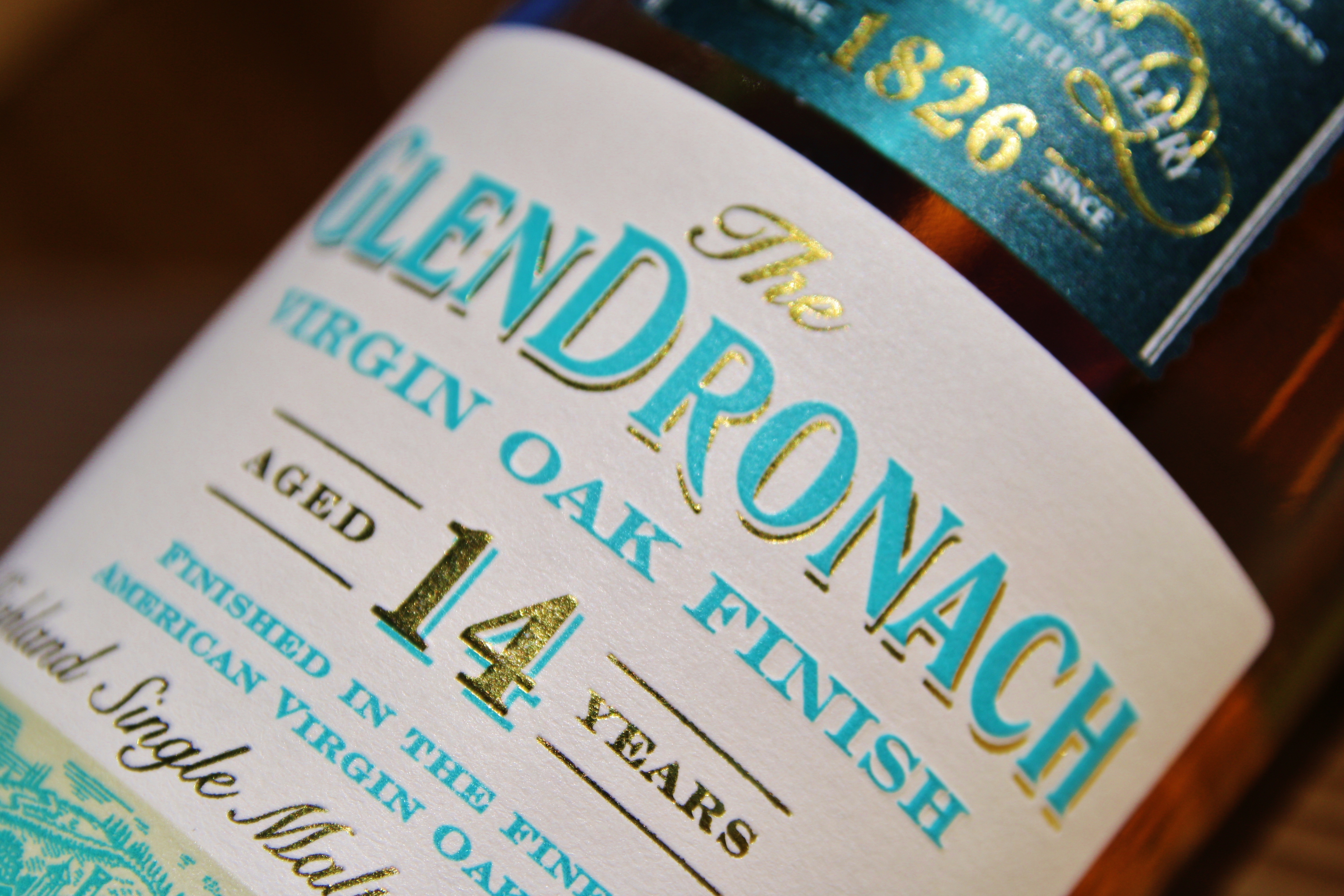
GlenDronach 14 y.o. Virgin Oak Review

GlenDronach 14 y.o. Virgin Oak036

46% abv

Score:  87/100


I was fortunate enough to marry the dirty girl, so this little run at the virgin is a rather interesting experience.  I’m not used to such a clean bout of fun anymore.  😉

You gotta give it to GlenDronach.  These guys know how to make their whisky interesting.  I suppose it helps knowing that your distillate is exceptional to start with.  When you have such an inherently clean and malleable base spirit coming off the stills it likely takes a little pressure off your cask policy.  In layman’s terms…their new make spirit is good, so barring disaster, their whisky should always be fairly solid regardless of what sort of cask it goes into. 

This is not to suggest that GlenDronach’s wood policy is anything less than top notch.  Contrarily…the proof is in the pudding with just how many brilliant and unique single cask bottling we see from this Speyside distillery.  Quality is one thing though, and generally enough to keep us coming back again and again, but it’s the spirit of innovation in a whisky such as this 14 year old virgin oak (or its contemporary, the 15 year old tawny port finished release) that gives the distillery a leg up on some of its rivals.

In case you can’t tell…I’m a fan.

This particular ‘Dronach served out the first of its sentence in re-charred puncheons, before moving over to fresh American virgin oak.  The result is a very light and fruity dram.  Rich in soft white bakery notes, vanilla and fruit.  Atypical for this generally quite sherried whisky, but a treat because of it. 

Nose:  Creamy and frothy orange (creamsicle).  Big vanilla smoothness.  Toasted marshmallow.  Little bit of cinnamon.  Creamy toffee.  White chocolate.  Candy-like sweetness.

Palate:  Vanilla and orange rind.  Grains.  Alcohol-soaked white cake.  Like licking the last of vanilla ice cream off of a wooden popsicle stick.  Quite aperitif-ish, really.

So…

Virgin oak, huh?  That purity has never really held a lot of appeal for me.  I’ve always had a thing for the dirty girl, but in this case…I’ll take one for the team and make an exception.


– Reviewed by:  Curt

– Photo:  Curt

Ardbeg 17 Review

Ardbeg 17028

40% abv

Score:  90/100


Ardbeg 17 is quite legendary in its own right.  This was one of the early releases from the distillery after it was reopened and enfolded into the loving care of  Glenmorangie in 1997.  This wasn’t the best of Ardbeg, nor was it even really typical of the style we know (and love) today.  Instead it was a rather tame, mildly peaty dram that was bottled at 40%.  HOWEVER, there was no debate as to the inherent quality of the product.  The whisky in the bottle was mature well beyond its years, as it was comprised of older, pre-closure, Ardbeg single malt, and it had mellowed to a spectacular balance and complexity.  So sayeth the many voices out there: what ended up being bottled as a 17 year old was actually built with some casks much older.  You have to remember, though, that this was before the current whisky boom and slightly ahead of that point where the stuff in the green bottle became a thing of near cult status.

But we’re here to talk about the stuff in the bottle, so let’s move on.

A few years back Ardbeg released an expression called Serendipity.  It was referred to as a ‘happy accident’ or some such similar description.  Serendipity was a blend of young Glen Moray and older Ardbeg destined to be bottled as the next batch of Ardbeg 17.  Somehow these two component malts got vatted together.  Oops.  Anyway…long story short…the sweet bubblegum fruity profile of this Ardbeg is not far off the nose of that ‘incidental’ vatting.

Great whisky from Ardbeg, and sadly…long gone.  I year for a day when we start to see older ‘age expression’ releases from this distillery again.

Nose:  Clean…light…fruity.  Austere.  Some gum notes.  Not toooooo far off the ‘Serendipity’ in terms of nose profile.  Vanilla meets barley meets bread dough.  Cream soda.  Ummm…peat?  Hello?  You there?

Palate:  A wee bit of spice and peat now come through.  Vague smoke (almost as if an afterthought).  Immediately into apple notes.  Very light.  Very short.  Has a bit of a tangy citric nip.


– Reviewed by:  Curt

– Photo:  Curt

Laphroaig 21 y.o. Review

Laphroaig 21 y.o.barry's place pics 069

53.4% abv

Score:  90.5/100


Here’s one you’re not likely to easily stumble across.  In fact, until a mate of mine so generously shared his stash, I had never even seen it.  I believe this release was primarily a travel retail, or duty free, exclusive.

Laphroaig, of course, is one of the sledgehammer peated malts from Scotland’s peat mecca, Islay.  All of the distillery’s expressions, at least in the approximation of this reviewers senses, are built on the same skeleton of deep earthy peat, strong medicinal notes and billowy smoke.  Atop all of this however, I always pick up on a very hard-to-eloquently-explain prickly ‘green’ note.  Kinda weedy…kinda dill-like…VERY awesome.  It generally delivers the sensual effect of a eucalytus, but without the same mintiness.

Peated whisky in it’s youth can be quite out of balance.  And that is not necessarily a bad thing.  If you’re drinking it for the enormous smoky notes and phenolic blast, this lopsided character is exactly what you’re looking for.  I do, however, want to offer up a quick bit of advice for the peat-o-philes out there.  While you may love that bold enormity of these younger whiskies, do not pass up any opportunity to try the aged expressions.  Over the years, as that peatiness begins to fade, you can find a breathtaking harmony as the fruitiness of the whisky begins to surface again through the waves of smoke.  That combination…magic.

Good whisky?  Betcher ass it is.  What else would you expect in a mature dram from a distillery that consistently releases great expressions.

Nose:  Farmy and medicinal.  Pepper.  Peat (mild, really) and smoke, of course.  Black and green ju-jubes together.  Saltwater taffy.  A little bit gummy.  Impressive how much fruit (white fruit) shines through the curtain of smoke and peat.  In line with the Laphroaig Cairdeas releases that have some aged casks in them.  Lemon zest-ish, but not fresh and vibrant.  More like…lemon polish.  Finally…Vicks Vapo-rub.

Palate:  Some candy notes…or maybe it’s fruit.  Hard to tell.  Either way, there is a sweetness here that is home-y and charming.  Prickly and peppery.  Much smoke.  Briny.  Wet rock.  Earthy and medicinal, as a Laphroaig should be.  That’s why we love ‘er.


– Reviewed by:  Curt

– Photo:  Curt

Brora 30 y.o. 2005 Review

Brora 30 y.o. 2005

56.3% abv

Score:  93.5/100


This Brora was a real game changer for me.  Kind of a touchstone.  It was one of a small handful of whiskies that sort of forced a recalibration and an adjustment to earlier scores in some of my reviews.  A true-up, if you will.

This malt (along with a few others sampled in and around the same time) made me take stock of what I truly thought a great whisky was.  When you taste something like this, you begin to realize just how much is out there and exactly what sort of dazzling heights it can reach.  Make no mistake…this is a great whisky.  Nearly flawless, in point of fact.

Of all the other Broras I’ve yet tried (great as they may have been), none are as good as this 30 year old 2005 Diageo release.

As you may know by now, the early 1980s saw a rash of distillery closures amidst a far-reaching and heartbreaking whisky recession.  While the casualties are mourned by collectors and enthusiasts even today, it was the sound of the gates swinging closed on two distilleries in particular that resonated loudest and longest.  The first…Port Ellen.  If you’ve been reading here long enough you’ve likely heard me waxing poetically about this loss.  Enough so, in fact, that I won’t devolve into another sobfest of Port Ellen sentimentality here.  The second however…is Brora.  And for Brora…I feel no qualms about sharing a few romantic thoughts.

This whisky is a seriously overwhelming experience.  The tightrope walk, balancing a rather hefty peating and the mature waxy notes of age, is brilliantly executed.  The nuances are rich and deep…yet still subtle and seductive.  This whisky was pulled from the cask and bottled at precisely the right moment.  This is apex.

While we do still have a distillery at the site of what was once Brora, it’s impossible not to recognize that the whisky being distilled there at Clynelish is just not cut of the same cloth.  That’s no knock against Clynelish, of which I am a fan.  It’s just that Brora was a one-off, not to be replicated.

This review has been far too long coming.  I was sorta saving it for an occasion, but…whatever…now’s as good a time as any, no?  Everyone wants to know what Brora is like – especially as it becomes more and more scare and expensive – so let’s share a few notes…

Nose:  Wow.  A stunning mature, farmy and salty dram.  Peat, smoke and iodine.  Leather.  Rubber bands.  Lapsang Souchong tea.  Buttery peat (not far off from Bruichladdich’s signature peating style), and creme caramel.  Citrus.  Something very fresh.  Also something very mature.  Brilliantly dissonant from the majority of the whisky world, but incredibly harmonious unto itself.

Palate:  As lovely as the nose is…in this case it simply can’t hold a candle to the palate.  Beautiful.  Big, bold and flawless.  Smoke and pepper.  Rich and earthy peat.  Rubber again.  Stunning array of spices.  Citrus again, but a little sweeter now, but also with some pith.  Salt licorice.  Again with the rich smoky Lapsang Souchong tea notes.  Like a very, very mature Port Charlotte.  Hot and alive, even at thirty years.

I think (and hope) this is where Longrow could end up with enough time in the cask.


– Reviewed by:  Curt

– Photo:  Curt

Tullibardine…Calgary Revolution Tully Tasting

Tullibardine_logo

TULLIBARDINE ……………………CALGARY REVOLUTION TULLY TASTING  

For the benefit of the great unwashed, the Tullibardine distillery was founded in 1949 by an architect by the name of William Delmé-Evans.  It is located in the village of Blackford in Perthshire.  William Delmé-Evans, also known as Willie, was involved with the construction of the Jura distillery in 1963 and the Glenallachie distillery in 1967. He remained as managing director of the Jura distillery until his retirement in 1975, but not before overstocking the distillery with more Willies (Willie Tait & Willie Cochrane) to ensure that a Willie would always remain at the head of the distillery.

The Tullibardine distillery was built on the site of an old brewery from which King James IV was said to have purchased beer for his many overnight jousting parties, along with his coronation in 1488.  Hence the 1488 beer that is sold today and the unofficial distillery motto of: “A mounted Knight is a happy Knight”. The Tullibardine distillery was first sold in 1953 to Brodie Hepburn Ltd. and in turn was purchased by Invergordon in 1971, followed by Whyte & Mackay in 1993 nosing their way in and then mothballing the distillery in 1994. The distillery remained closed until 2003 when it was sold to a consortium of private investors who in the same year started up production again. In November 2011 the distillery was then sold to a French corporation and the current owner, Picard Vins & Spiritueux.

Recently Tullibardine altered their lineup and updated their packaging but what was the real reason behind the change? Well the answer may shock you, then again being a whisky drinker it may not, but if you have an open mind and are ready to accept an alternate version of what you have been fed by the whisky industry, then keep reading and we’ll show you how deep the French designer rabbit-hole goes.

ARRETER LE BUS ……………. STOP THE BUS / TRUFFLE FROTTANT …………… TRUFFLE RUBBING

Using our extensive connections within the whisky drinking community and for the price of a few drams, we managed to loosen the tongue of a whisky bar patron to talk us about the real story behind the change at Tullibardine, Glenmorangie and so many more Scottish distilleries.

The SHOCKING TRUTH is that some Scottish distilleries may be rubbing the inside of casks with truffles before filling them with new spirit.

This whisky bar patron and self-professed industry whistle blower known only as Jerry is quoted as saying, “The practice of rubbing ones truffle is well known”.  Jerry also went on to say, off the record, that truffle rubbing was born out of desperation after the 1983 downturn. Distilleries turned to bold innovative strategies to attract new consumers to help leapfrog sales. The French were targeted as an unrealized market and, given that the French possess a superior sense of smell and taste, it was thought that by rubbing out a truffle inside a cask would somehow appeal to their senses and give the consumer the ultimate bespoke Roja Dove olfactory experience. Jerry further said that certain distillers experimented using Perrier water to reduce cask strength whiskies, finished their whisky in Burgundy wine casks (now legal but not at the time) and would use subliminal subtitles on packaging to confuse the consumer into thinking the product was high-quality (“soufre est bonne, si elle boit”/”sulphur is good, so drink it”).

Jerry also said that a few distilleries went even a little further and experimented with intense potent cheeses infused with pureed land snails, in a process called Escargot Brie Blasting. This was done to new casks after charring, but was halted because the workers couldn’t handle the wafting bouquet…and then there was the problem with the mice infestations.

Nobody ever thought that this practice of truffle rubbing, also known as the Eiffel Effect, would become so successful that French consumers would abandon their beloved Brandy and, like catnip to a cat, cocaine to a lawyer or power to a politician, become so helplessly addicted to the golden malt that the French would become the number one (un) consumers of Scotch whisky in the world.

What happened next no one saw coming. French corporations, as quiet as beret wearing mimes inside invisible boxes, went about buying Scottish distilleries on a Grand Napoleonic scale. The purchasing of so many distilleries, we think, was a belief held by French corporations that by owning distilleries they could make the world a better and more beautiful place, while making enormous profits for themselves.

French corporations believed by designing packaging so exquisite that it would transform the average repugnant whisky bar troll/punter into a striking desirable six pack, yacht owning, polo player by simply holding the attractive packaging in front of their dreadfully average faces. Therefore, the great unwashed whisky consumers would line up like Lemmings on a cliff ledge to pay double, triple or more than previous prices all the while thanking the French distillery owners for the privilege to do so.

Tullibardine translated means “Hill of Warning”, so to sound a warning and to back up this claim, we have noted below the Scottish distilleries purchased by French corporations since 1983:

– 1989 Glenallachie sold to Pernod Ricard

– 1997 Ardbeg sold to Moët Hennessy

– 1997 Glenmorangie sold to Moët Hennessy

– 2001 Allt-A-Bhainne sold to Pernod Ricard

– 2001 Braeval sold to Pernod Ricard

– 2001 Glenkeith sold to Pernod Ricard

– 2001 Glenlivet sold to Pernod Ricard

– 2001 Longmorn sold to Pernod Ricard

– 2001 Strathisla sold to Pernod Ricard

– 2005 Glenburgie sold to Pernod Ricard

– 2005 Glentauchers sold to Pernod Ricard

– 2005 Miltonduff sold to Pernod Ricard

– 2005 Tormore sold to Pernod Ricard

– 2008 Glen Moray sold to La Martiniquaise

– 2011 Tullibardine sold to Picard Vins & Spiritueux

– 2012 Bruichladdich sold to Remy Cointreau

In California they have a saying “if the gloves doesn’t fit, let it go”.  Well…this glove fits. I’m sure along with the changes in packaging at Tullibardine, the price of an average bottle will be raised like taxation on the poor working class just before the French Revolution and we all know how that ended.

In the mean time you can still enjoy Tullibardine at a reasonable price, which prompted us to have a Calgary Revolution Tully Tasting, where we went about storming four liquor stores in Calgary to liberate four exclusive single cask Tully Hogshead bottlings. To be fair to the stores, we tried the malts blind and the guillotine was never used on any of the stores employees (officially).

To quench the blood red sherry thirst of the common people we finished the night by adding in three more single cask Tullies from 1973 , 1993 PX Sherry Cask and a 1966 Sherry Butt ( World Cup Vintage) but drank these disclosed.

“Vive La Revolution Deux”

So…on April 23, 2013, at the first formal club tasting of the Dram Initiative, we tasted the following Tullibardine malts. Members (Herein after called the Dramned) and some guests, judged the first four malts blind to determine which store can claim to have better taste.

003


1992 – March 2008   53.8 % ABV   Willow Park Wine & Spirits

Bourbon Barrel (Most likely Hogshead) Cask # 239 Bottle # 193 of 241

NOSE: Sweet fruit, vanilla, cherries, cinnamon, flora and minty.

TASTE: Butterscotch, grassy & musty, soft fruit and some raisins.

FINISH: Medium and elegant.

ASSESSMENT: A light delicate mellow dram.


1992 – September 2011   40.3 % ABV   Co-op Wine Spirits

Barrel (Most likely Hogshead) Cask # 1875       Bottle # 22 of 191

NOSE: Candy jujubes, caramel, oranges and some other citrus notes, white chocolate.

TASTE: Blueberry tea, burnt sugar, buttery and marzipan.

FINISH: Vibrant at the beginning. Medium and a tad more.

ASSESSMENT: Nice nose but odd palate.


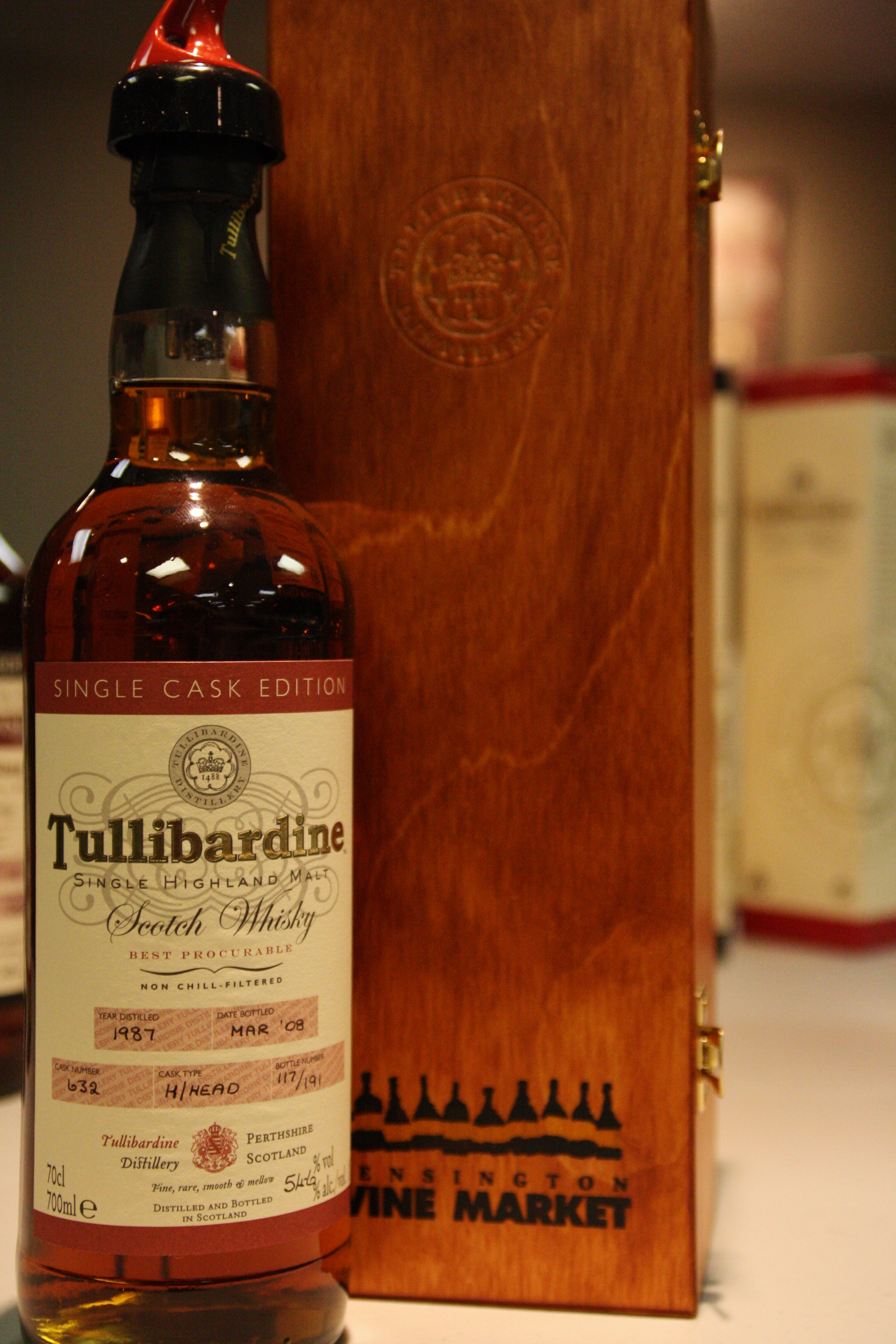
1987 – March 2008   54.6 % ABV   Kensington Wine Market

Hogshead Cask # 632       Bottle # 117 of 191

NOSE: Burnt cherries, grape juice, little farmy, cinnamon, nicely layered.

TASTE: Green apples, dark chocolate, raisins, almonds and some tannins.

FINISH: Medium to long.

ASSESSMENT: Very robust for a hogshead cask.

005

1987 – July 2012    50.1 % ABV   Wine & Beyond / Liquor Depot

Hogshead Cask # 650       Bottle # 22 of 207

NOSE: Coke in a can, lots-o-vanilla, coffee and caramel some light stewed fruit.

TASTE: Creamy, marzipan, soft fruit, oatmeal, and some mild tannins.

FINISH: Medium to long. Very gentle fade at the end

ASSESSMENT: Tingles on the tongue. Pleasant candied dram.


********** Score card for the battle of the store picked casks **********


WIN          – 1992    Co-op Wine Spirits Cask # 1875

PLACE       – 1987   Wine & Beyond / Liquor Depot Cask # 650

SHOW      – 1987    Kensington Wine Market Cask # 632

WJWP*     -1992   Willow Park Wine & Spirits Cask # 239


*Whisky Judged Without Pity


1973 – May 2005   45.9 % ABV   Single Cask Release

Hogshead Cask # 2518       Bottle # 21 of 239

NOSE: Sweet honeyed heather, vanilla, cherries and oranges. Honeydew melon.  Some mint.

TASTE: Creamy, almonds, milk chocolate, grassy. A little pineapple & coconut.

FINISH: Medium. Succulent to start and fades softly away.

ASSESSMENT: This is so smooth you would think this is below 40% ABV. Sublime!


1993 – September 2009   54.5 % ABV   KWM

Pedro Ximinez Sherry Cask # 15081       Bottle #96 of ?  (Split with McLeod Dixon)

NOSE: Sharp sherry spices with lots of vanilla, raisins, and tart orange zest and tobacco notes.

TASTE: Sweet cherries, dark chocolate, lots of spices….nutmeg, cloves and cinnamon to start. Some pepper and tannins.

FINISH: Long. Assertive younger sherry with some sweet notes.

ASSESSMENT: WBS ………Welcome Back Sherry, we’ve missed you after the five sweet bourbon hogsheads.


1966 – April 2006   48 % ABV   General Release (World Cup Vintage)

Sherry Butt Cask # 2132       Bottle #251 of 384

NOSE: Ripe melons, creamy toffee, oranges and cherries.  Cocoa & coffee.  Some floral notes.

TASTE: Mellow spices, green tea. Lots of jammy stewed fruits and some cedar tobacco notes.

FINISH: Long with a gentle fading finish.

ASSESSMENT: Complex, the more you drink it the more notes you can find. Sensuous and stunning for a 40 year old sherry cask.


006

Boire Comme Un Trou.


– Your humble drudge and member of the walking Dramned,

          Maltmonster
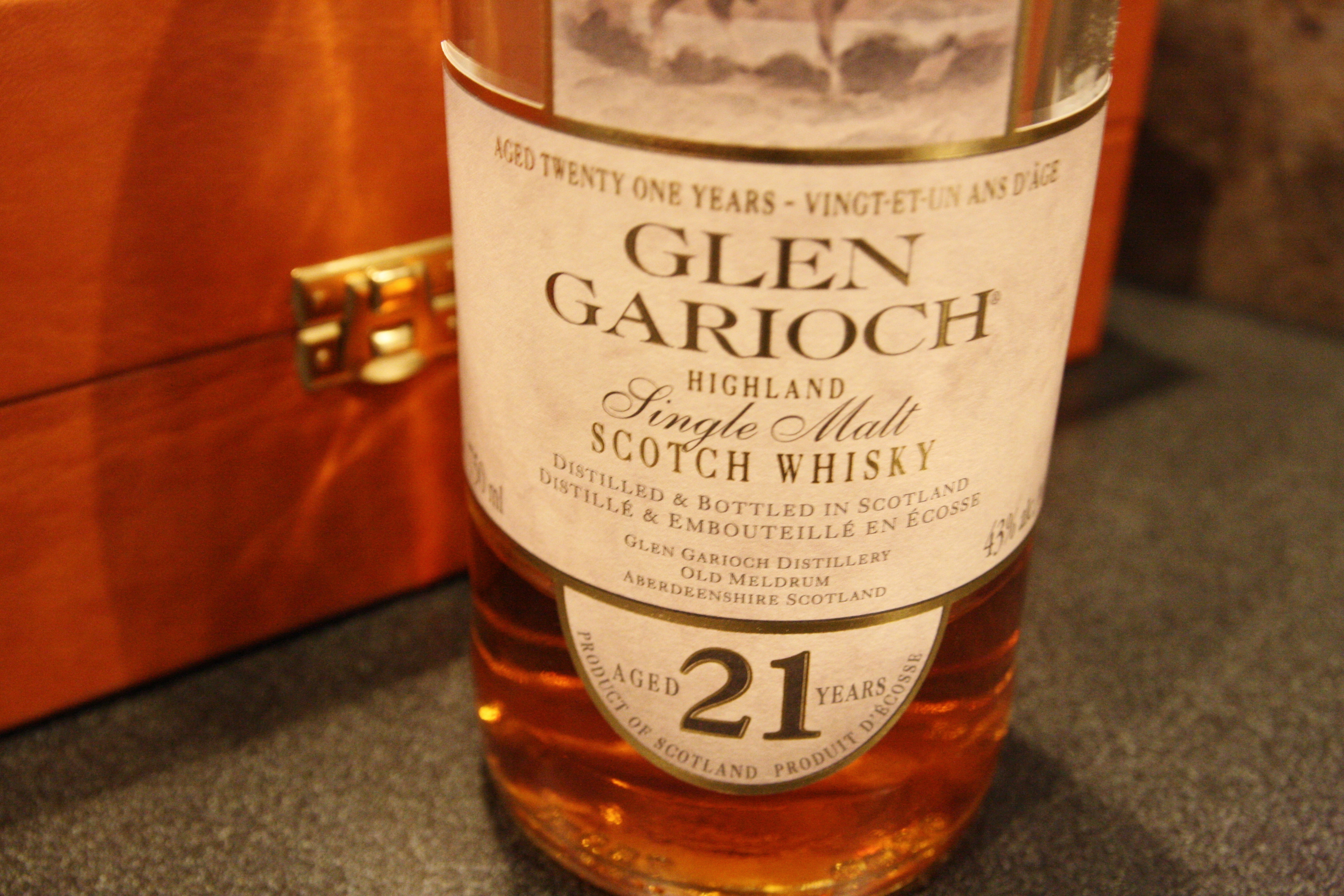
Glen Garioch 21 y.o. Review

Glen Garioch 21 y.o.050

43% abv

Score:  85.5/100


Spectacularly unspectacular.  Hate to say it, but absolutely true.

Shame on me…I went into this one with rather elevated expectations.  We should all know by this point not to do this.  Malts should always be approached with the ‘hope for the best, plan for the worst’ type of mindset.  Especially when buying older/pricier drams.  How truly disappointing to find a whisky that should be at it’s zenith (that magic fulcrum between old enough and young enough), and simply…well…isn’t.

Glen Garioch is sort of a ‘middle-of-the-road’-er in Suntory’s stables.  It’s a Highlands malt which, in it’s infancy, is fairly average.  And as it gets older is…uh…still fairly average.  Generally a rather sweet, spicy, caramel-rich and apple-y malt, Glen Garioch offers little in the way of surprises.  I was kinda hoping this 21 year old OB (original bottling) would bring a little more to the party.  Oh well.

But hey…disappointment does not necessarily correlate with quality (or any lack of).  This is still a decent dram.  If you can scoop it at the right price point you’ll be sitting with a balanced easy-drinker suited to most occasions.  And maybe that ’21’ on the bottle will suitably impress your less scrupulous mates and houseguests.  😉

Nose:  Dust.  Red licorice.  Vanilla.  Floral and perfumed.  Sugar cookies, orange marmalade and touch of mint.  Pepper.

Palate:  Oak is very loud and it’s a bit too sharp on the deep vanillins.  Uber sweet with some mint again.  Kinda like a spritz of perfume on the tongue.  There may be a touch of peat…and a wisp of smoke.  Barley stands up to take its bow at the end in a crescendo of grains.

Not a bad nose, but the palate just doesn’t measure up.  Shame that at 21 years this Highlander shows so little true individuality and character.  By no means bad, just utterly mundane.


– Reviewed by:  Curt

– Photo:  Curt

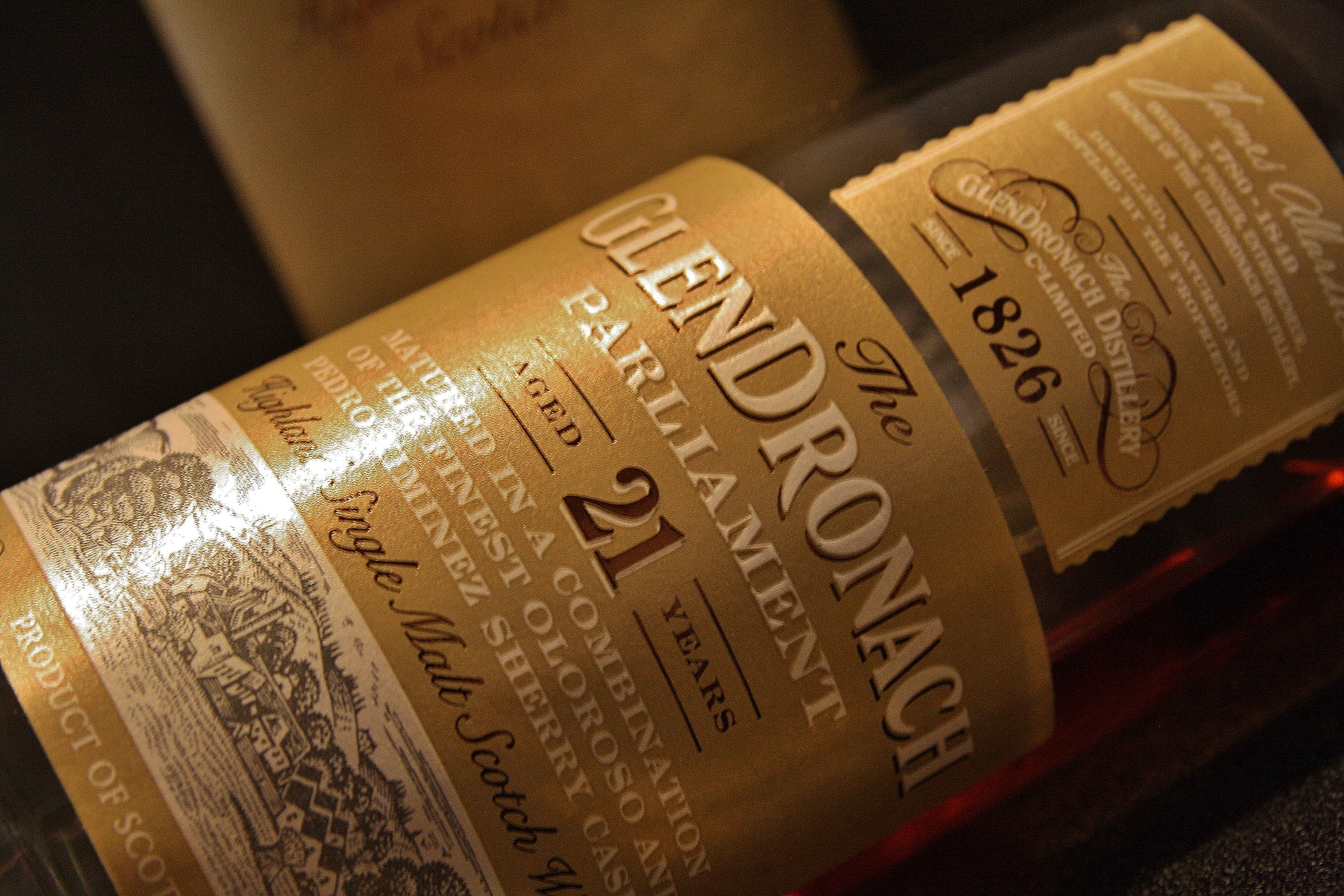
GlenDronach Parliament 21 y.o. Review

GlenDronach 21 y.o.21P1

48% abv

Score:  85.5/100


One of the older siblings in the GlenDronach standard range.  Named, apparently, for a parliament of rooks (read flock of birds) that nests in the trees near the distillery.

Label says Oloroso and PX maturation, but I’d peg this more as 80% Manzanilla/20% Oloroso.  Well…maybe not quite, but it certainly isn’t even close to as sweet and rich and vibrant as the Oloroso/PX mix would lead me to believe.  Perhaps it’s simply the saltier nature of a quirky meaty note in here that makes me think Manzanilla.

Sadly, though not necessarily a spoiling factor, there is sulphur all over this one.  Not a heavy sulphur, but a broad swath of it across all facets nevertheless.  Even so…I still don’t mind sipping at this one.

Nose:  Needs a little time in the glass before shaking hands with this one.  Surprisingly beefy for a ‘Dronach.  I don’t mean that in terms of strength, but a true meat note in there.  Some sweeter sherry notes coming through too (orange, black cherry, raisin,).  Clove.  Malt heavy.  Over-toasted cask notes.  Finally…as mentioned…a healthy hit of sulphur.

Palate:  Like a diluted a’bunadh with a heavier malt/meat component.  Strong high content dark chocolate.  Bitter greens meet bittersweet juicy grape.  Tart fruit and wine.  There’s a match-like ashy note here too.  Quite drying.


– Reviewed by:  Curt

– Photo:  Curt