Category Archives: Whisky Reviews & Tasting Notes

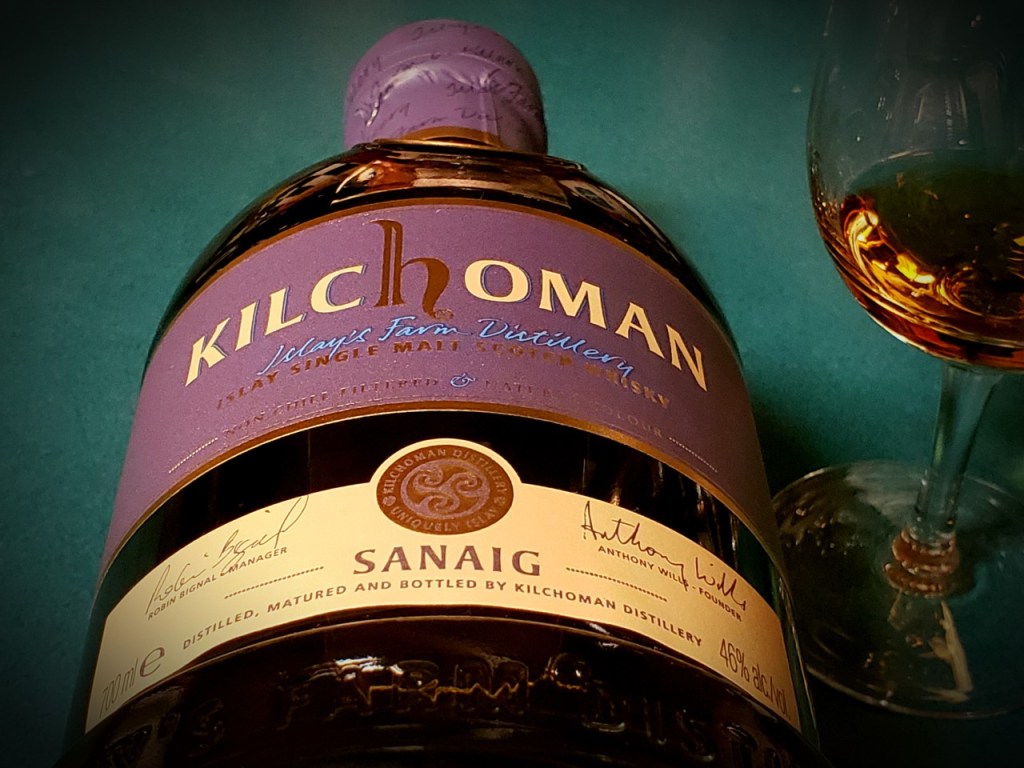
Kilchoman Sanaig (2020) Review

This one came as a bit of a surprise in my circles. Normally we don’t get so hung up on color that it becomes the primary speaking point, but let’s face it…this stuff is about four shades darker than previous releases. It looks like medium roast coffee mixed with cherry cola. The usual light-to-dark color spectrum of the big three Kilchoman expressions – Machir Bay, then Sanaig, then Loch Gorm – was turned on its head with the arrival of this 2020 edition of Sanaig. It scrambled the wee rainbow and threw the darkest of ’em all smack dab in the middle of the trio. Quite frankly, the hue shames the fully-sherried Loch Gorm. And while Sanaig may be a marriage of ex-bourbon (30%) and ex-oloroso casks (70%), it’s unquestionably the sherry that stands center stage here. You’ll get some of the spice from those bourbon barrels, but the more subtle notes – coconut, vanilla, etc – are lost beneath the deeper wash of Oloroso.

Expect big spice, big dried fruit tunes and bucketloads of savory, charry, goodness. Oh, and quality. You’ll find it here in spades.

Sanaig is named for a rocky little cove off the northern coast of Islay where the cold, harsh waves of the Atlantic dash themselves time and time again against ancient metamorphic rock. Are we running out of geographical/geological features on Islay to name our beloved malts after? Asking for a friend.

46% abv

Tasting Notes

Nose: A hella big peaty dram. Beachside bonfire. Islay malt married to grape juice. Raspberry and orange. Fig spread. Ju-jubes. Seared scallops and bacon. Some sort of red wine-reduced savory meat sauce. A bit of unlit pipe tobacco.

Palate: A lot smoke, a fair bit of hickory. Fruit leather. Arrives juicy, develops some slight tannins around the mid palate. Purple grapes and plums. Figgy pudding. Sen-sens. Cough drops.

Finish: Long and smoky. A hint of smoked shellfish and some flinty notes as it fades.

Thoughts: A little top-heavy – or maybe just overly rambunctious – but well-built, nonetheless.

88/100
Kilkerran 12 y.o. (2018) Review

I kinda get the impression that Hedley Wright wasn’t born with enough middle fingers. If you don’t know the gent I’m speaking of, rest assured that I mean this with the utmost respect for this nonagenarian. Confession: I absolutely adore the Hedley ethos.

Some of you are probably aware that I have an almost unconditional love for Campbeltown and Campbeltown whiskies. I love the place, the people, the history and the distilleries. I love the bars and the late-night strolls. Most importantly, I love all the memories I’ve made there. The clock seems to move at a different pace on this wee peninsula.

But I suppose we should be talking about the whisky we’re reviewing, aye?

Kilkerran, as many of you will know, is not a distillery; it is the brand name for the single malt produced at the Glengyle distillery.

So, here’s the tale as I’ve heard it told, for those that may not have listened to me sentimentalize this one in person: Back in the early 2000s, Campbeltown was in danger of losing its regional status in the eyes of the Scotch Whisky Association. The ‘wee toon’ ’round the harbour – once the world’s most famous and in-demand whisky-producing sector – had reached a point where only two distilleries remained in production. A mighty fall for a town (and region) that once boasted more than thirty producers.

Enter one Hedley G. Wright, a generational descendent of the Mitchell family (whose name you’ll still see adorning Springbank bottlings to this day), and his mad machinations to protect the regional status of Campbeltown. Hedley made the argument that the Lowlands only had three operational distilleries and were still a recognized region, ergo, if Campbeltown had the same number then they should reap the same benefits. The SWA agreed. So, Hedley bought the neighbouring corpse-distillery of Glengyle, cleaned out tons of birdshit (and who knows what all else), and tricked out the building with equipment purchased from the now-defunct Ben Wyvis distillery. All equipment, piping and possibly even the kitchen sink was procured for a rather paltry £300,000. And in 2004, the spirit began to flow.

Twelve years later we’ve reached the culmination of a lot of ‘work in progress’ releases, and if I’m being honest…this is one of the most impressive age-stated renaissance expressions I’ve ever encountered (Laddie 10 being another). It’s everything I wanted, and a whole lot more.

Batches vary, I understand, but this one was apparently 70% ex-bourbon, 30% ex-sherry. Bottled at 46% abv. Bottle code: 18/337. Bottled: 03/08/2018.

Tasting Notes

Nose: Awww, yeah. A heapin’ helpin’ of the Campbeltown funk. Love it. Smells of the farmyard. Oat cakes. A touch of pool water (chlorine?). A balanced salinity. I keep catching a fleeting whiff of blueberry. Lemon. Burlap, or hessian. Peanuts in the shell. A bit minerally, maybe slate or clay.

Palate: Love this distinctive peatiness. A nice clean citrus, both lemon and orange. Licorice Babies. Like chewing on a stalk of straw. Those oat cakes are back again. Overbaked – not quite burnt – pastry.

Finish: A nice lingering farmy funk. Salty crackers. A nice peaty fade.

Thoughts: Almost indistinguishable from Springbank. And that, of course, makes perfect sense.

89/100

Brora 34 y.o. (2017) Review

It never sucks to drink Brora. You could waterboard me with this stuff and I’d probably be okay with it. Ok…that may have crossed a line. Sorry.

We just reviewed a Clynelish, so how ’bout Brora? Sort of a VW/Audi thing. Or something. Unfortunately, I have less than a dozen bottles of Brora left in the bunker, so unless something drastically changes in the coming years, reviews of this Sutherland beauty are bound to be as scarce as oases in the Sahara. Recently, however, I had occasion to pop the cork on a special bottle to mark a celebration: I promised some mates that if Trump was booted from office I would open a Brora. I also promised myself a mental health break from the political divisiveness that seems be tearing civilization apart and a return to whisky jotting in my spare time. So…here we are.

Brora has a reputation, of course, but Brora also has a complicated personality. Not only are there some nearly impossible ties to unknot between Brora and Clynelish (especially in the earliest years of tandem distillation at the neighboring sites, but also between the more heavily-peated outings and those that are more fruit/wax/caramel-driven. I’ve had both. And both can be utterly dazzling. And, though it won’t put this conversation to bed, it will at least allow us to hit ‘snooze’ for a bit and return to this rather big subject later on. Let’s just say, I have my theories.

This 34 year old is one of the more restrained Broras I’ve yet tried. The nose, especially, is a wee bit shy, but the palate is much more expressive. If you’re chasing big phenols, you’re looking in the wrong place. But at 34 years, you’d be looking in the wrong place no matter which expression you were tasting. There’s a nod to the peatier years here, but it arrives like the fashionably late party goer. Albeit…maybe a bit more well-behaved, when all is said and done.

This release was a part of Diageo’s Annual Releases back in 2017, before they nixed the inclusion of Brora and Port Ellen in those outturns. It was limited to 3,000 bottles. 51.9% abv.

Tasting Notes

Nose: Little peat to speak of. But of course, there’s some wax. A touch of milk chocolate. Orange juice. Warm chamois leather. Incredibly soft fruit mélange. Apple pie (easy on the cinnamon and such). Putty. Even a faint hint of capers. Clay. An unlit Cuban, where the aromas are subtle and pretty.

Palate: Oh, wow. Juicy and mouthwatering. Orange and tangerine right up front. There’s a bit of smokiness come the mid palate, but it arrives with vanilla, melon and much more wax. Some more citrus, mostly lemon. Now we have some peat, by way of a slight earthy funk. A touch of blanched almond.

Finish: Clean and long. Some honeydew melon and deeply herbal notes.

Thoughts: Not sure why this one isn’t held in higher esteem than it is. May take a wee bit more concentration, but peeling back the layers shows just how elegant and layered it is.

Score: 92/100

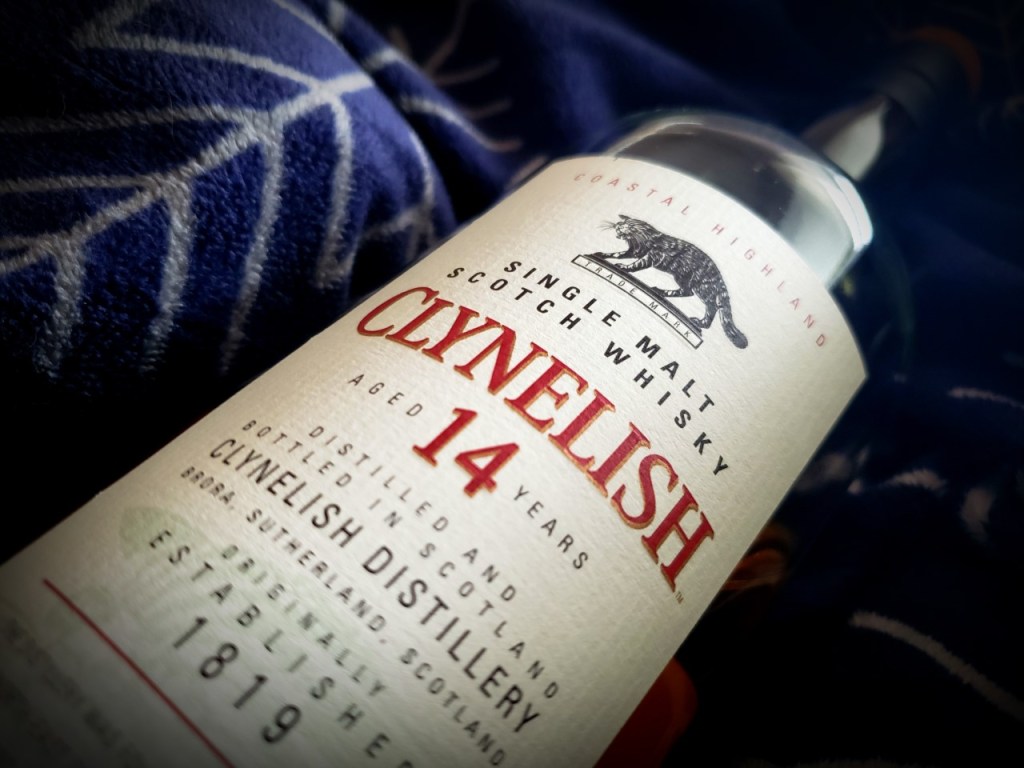
Clynelish 14 y.o. (+/- 2019) Review

I sell whisky for a living. And yes, for the most part it is everything it’s cracked up to be and more – largely because of where I sell whisky, but that’s a story for another day.

I get asked all the time for recommendations that come in around that $100CA a bottle marker, and asked what I would drink in that price range. The Classic Laddie, Pulteney 12, Benromach 10, Johnnie Black (honestly), and Clynelish 14 are some of my immediate thoughts. There has to be both character and quality there to hold my interest. In my line of work, there is no shortage of great whisky at hand, so for a so-called ‘entry level expression’ to remain in constant rotation at the forefront of my grey matter, it has to be really damn good. And Clynelish 14 is consistently really…damn…good.

Part of it might be personal bias – I love the tangled and messy story of Brora/Clynelish – but there is more to it than simple infatuation with a distillery’s history. The fact of the matter is that Clynelish produces one of the best makes in the Diageo stable. It may not always turn out the way we’d hope in indie bottlings, but the brand’s flagship 14 is a winner. A bit waxy, a bit coastal; laden with citrus and a wee bit of a flinty edge. It’s hard to ignore inherent quality and singularity in a field that can sometimes (especially in younger OBs) feel a bit stagnant and one-dimensional.

46% abv.

Tasting Notes

Nose: Slightly boozy, without being spirity. Apples and barley fields. Linseed oil. Shale and salt water. A nice minerally underbelly. Dried ginger. Beeswax. Lemon Pledge furniture polish. Maybe a faint whiff of smoke back there somewhere.

Palate: Immediately waxy. Some apples and a squeeze of orange (and a decent dribble of lemon concentrate). Sauvignon blanc. A nice tannicity keeps things firm. Briny and coastal. Salted pasty dough. A puff of dirty smoke at the back end.

Finish: Love the tang and pucker as it ebbs. Leaves a bit of orange zest, salt water, and vanilla. Reminds a bit of dental gauze. Still rather drying.

Thoughts: Consistently one of the stalwarts of the <15 year olds. Some batches are better than others, but I’ve yet to find one I wouldn’t spend money on.

Score: 87/100

Oban 14 y.o. Review

Can you believe it’s taken a decade for me to get ’round to putting up tasting notes for Oban 14? I carried this one like an albatross for a long time, but I suppose it’s about time for this mariner to shed the dead bird and get on with things, aye?

Oban 14 was one of the earliest malts I remember really sinking my teeth into. And there’s a reason it resonates strongly with me. I moved out of my folks’ place when I was quite young. My dad took yet another work transfer and, at 17, I was stubbornly unwilling to leave my girlfriend and uproot for the umpteenth time in my life. So…I got a job and stayed behind when the fam moved on to…browner pastures. As was probably the case for many of you out there, job number one for me was in a kitchen. I was good at multitasking and good at cooking, but I was also good with people. Fortunately, management saw this and allowed me to start slinging drinks and serving tables instead. I think it was partly in recognition of an untapped resource, but also an empathetic response to them knowing how hard I was struggling to finish high school while working enough hours to cover rent. Either way…they broke the rules and let me bartend underage. This concession, of course, drastically altered my income. There were also…errr…romantic perks. (Enough, boy, enough.)

At the end of the night, when the place had emptied out and the doors were locked, management would take off into the back to finish cashing out, and we front-of-the-house folks would slam a quick pint and sample the whisky behind the bar. Oban 14 was one of the first to really jump out at me.

I’ve revisited a few times since those early days, but not nearly often enough. And now, with a glass in hand, I really do feel like I’ve sold myself short. This is a much more elegant and rounded malt than I recall. I’m digging it now more than I ever have in the past.

Tasting Notes

Nose: Somewhat delicate, but with a big personality, if that makes sense. Quite beautifully fruity, with some nice orange and grapefruit notes topping out first. Kiwi and kumquat. A faint peaty prickle and loads of saline sea breeze. A bit of pepper. Leather. Stewing fruits.

Palate: More peat now. In fact, it arrives first. Milk chocolate and cinnamon/nutmeg-esque spices. A bit of wet, smoky grist. A really cool orange-y tang on the mid-palate. Honey in green tea. Nice thin notes of smoke throughout. A bit drying, with a brilliant grapefruit candy note that teases an appearance in all-too-brief moments.

Finish: Surprisingly long. Leaves some neat fruit skin notes and very clean oak. I love that the barley still shines through.

Thoughts: A real shame about the anemic bottling strength, but I recognize this may not be targeted for the purist. Truly a pleasant revisit. I can’t lie: I’m kinda crushing on this malt right now.

87/100 (Though at 46% or higher, I think we’d be nudging closer to 90%)

025

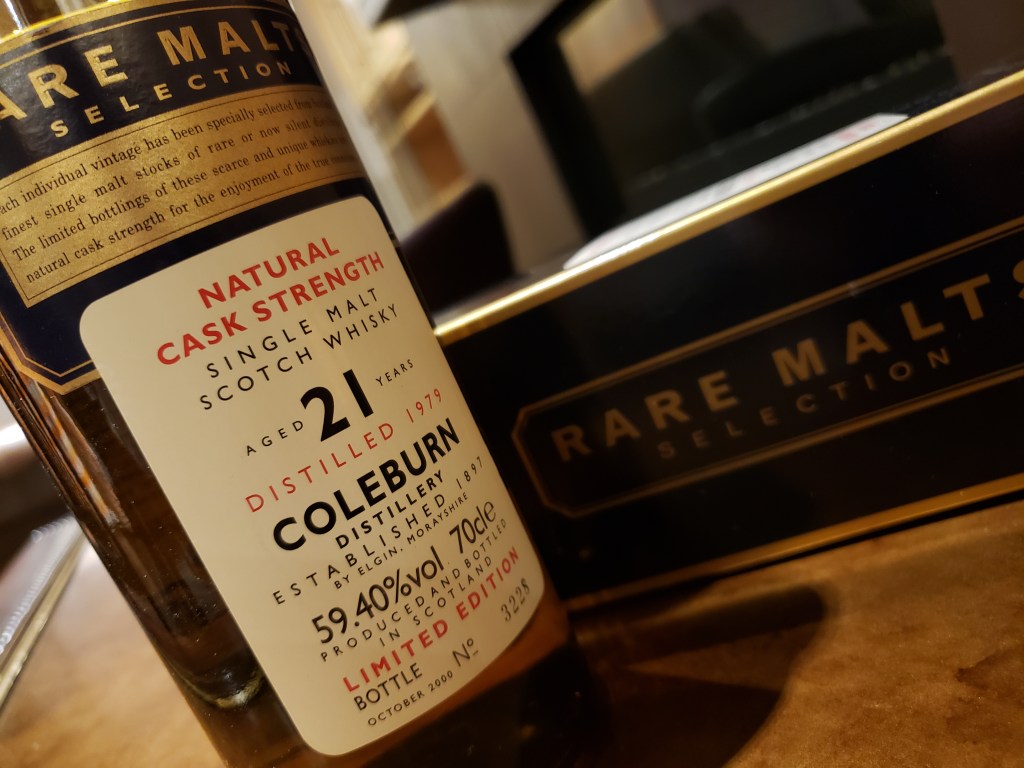
Coleburn 21 y.o. Rare Malts Review

Only the second Coleburn review on ATW. Tsk tsk. For shame. It’s almost like some strange factor is limiting access to malts from this Speyside distillery. Hmmm. Oh…right.

For the record, Coleburn was yet another casualty of that devastating extinction event that claimed so many distilleries in the early 1980s. The distillery was a bit of a Frankenstein’s lab throughout a fair chunk of its existence, used mainly for production experimentation, and largely dedicated to providing malt for the Diageo family of blends. Seems a shame in retrospect, as we begin to realize the long term ageing potential the malt had. We say that far too frequently of late, I realize. I also concede we sentimentalize a bit too often as well. Such is.

This 21 was one of the iconic Rare Malts releases that sits in high stead and coveted pride of position for many malt drinkers. And rightfully so, I’d argue. We may see more nuance and subtlety through other ranges (and bottlers), but for pure bombast, it really is hard to pip the Rare Malts.

Coleburn was founded in 1897 and shuttered in 1985. RIP.

59.4% abv. Distilled in 1979, bottles in 2000.

Sincere thanks to my mate Brett Tanaka for the opportunity to taste this. The range of bottles he’s been opening for what we’ll call ‘The Brett Sessions’ are simply beyond comprehension. And I am beyond humbled to be able to partake. I’ll be reviewing dozens of them in the coming weeks/months.

Tasting Notes

Nose: Sour and just slightly cheesy. Sour Ju-jubes and quality eau de vie. Greengage. Orange, apple and cranberry. A wee bit of smoke. White chocolate. Honey. Riesling and green grape skins.

Palate: Oh, wow. Great arrival. Enormous, actually. Malt and rubber. Grapefruit zest (and a bit of pith too). Kinda makes it a bit weedy and bitter. Adds complexity. Rubber bands. Vegetal notes. Crunchie bar. Band-Aids. Reminds a bit of old Ledaig (a ’72 Cadenhead, in particular). Kinda dirty.

Finish: Drying, with firm tannins (though not overly aggressive). Let’s call it a ‘fair’ wood presence at the back end. Somewhat grassy. Some rubber. Vaguely industrial or chemical-y. In a great way.

88.5/100

Springbank 15 y.o. (2019) Review

Everybody’s darling. And rightfully so. It’s gotten to the point where most Springbank expressions don’t even hit the shelves anymore. At least locally. Preorder lists are a mile long, the din of begging voices is nearly deafening, and the tears of those who miss out are nearly voluminous enough to swim in. And why? Well…I think it ultimately comes down to something that would make other brands shudder: A complete lack of consistency. In short, Springbank is the most wildly inconsistent distillery in Scotland. In every sense of the word. They produce what and when they want (irrespective of distillery capacity or clamoring legions of thirsty fans), and they’ve managed to turn the idea of batch variation from something akin to the proverbial albatross into their greatest strength, and even their ‘misses’ are better than most distilleries’ ‘hits’.

This is what whisky making used to be. Period. Before the age of yield and consistency, the industry was very much at the mercy of barley and yeast variance, all-over-the-map wood policies, greater fluctuations in demand and pressures on stocks, less calibrated and measured production techniques (still firing, cut points, etc), and on and on and on.

And while Springbank is not immune to the many changes in the industry, Hedley and Co. have made it their business to march to the beat of their own drum. Status quo is not Springbank’s MO. And it probably never will be. A visit to the distillery will leave you…ahem…’woke’ (to cop an expression the ‘kids’ are using nowadays) to just how alien Springbank is to most of the industry. And just how utterly brilliant it is for it. Also…this is the only distillery on earth that can get away with as much sulphur as it does. I utterly detest the brimstone, but even I can’t fight just how singularly compelling Springbank is.

I’m rambling now, but perhaps a proper Springbank ‘Distillery In Focus’ feature is in our near future. Hmmm.

Anyway…let’s discuss this expression. Springbank 15 is a juggernaut of a malt. At once monstrously bold and mellowed enough by time to be approachable by all. And if the flavours are not particularly your cup of tea? Well…that’s fine, but it’s hard to argue objective quality with a whisky like this. And the dram in hand…I must say that this particular batch is an absolute cracker. Better than the most recent 18 we had, I’d wager.

46% abv

Tasting Notes

Nose: Noses older than 15, I have to say. Decent wafts of peat smoke. Salty, coastal, briny, and all of those other Campbeltown superlatives. Purple fruit. Oily dried fruits. Engine oil. Tobacco. Old libraries (in a 15 y.o.?!?). Cinnamon. A bit of sulphur (that largely blows off with time). Grape juice. And maybe some bramble jelly. Dunnage. Stables. White pepper and ginger. Just a hint of florality.

Palate: Flinty, Dirty and slightly matchstick-y. Chocolate. A very toasty malt profile, doused in over-caramelized sugar. Plum and prune. Sticky raisins. Some berry notes. Lapsang souchong tea. Licorice. Wet earth. Old World wine, four or five days open. Like spilling spent coffee grounds and a lit cigarette into a glass of Bowmore 18. Yep.

Finish: Long and smoky. Smoked fish and berry coulis. Candied apples. A bit drying, but oh, so long.

Thoughts: Thrilling, really, that a whisky like this still exists in our age of homogeneity. Gives me hope. And 46% is the perfect strength for this dram.

90/100

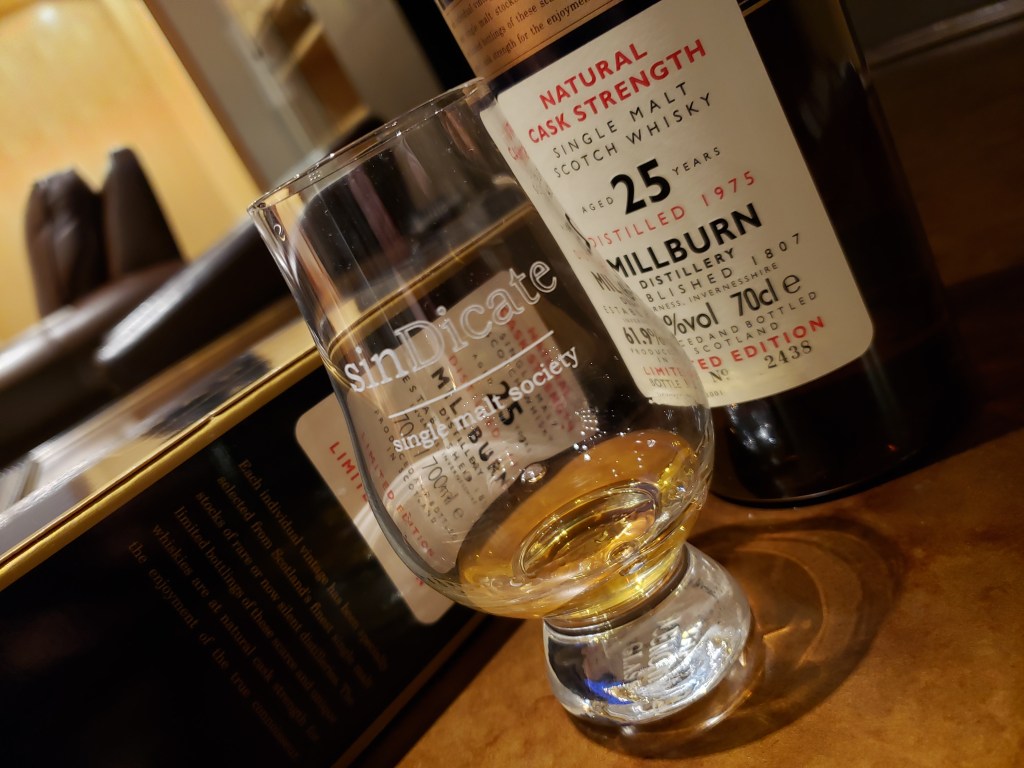
Millburn 25 y.o. Rare Malts Review

Lord t’underin’ Jaysus, b’y, what a dram!

And what’s this? Our first Millburn on ATW? Not all that surprising, I suppose. Even our mate Serge Valentin of Whiskyfun fame has only managed to wrap his paws around a couple dozen examples of spirit from this long lost distillery. Fear not, though: I have one more sample in the wings that I’ll try get to soon, while this one is still fresh in my memory. To be fair…these things are nearly as rare as Trump truths. And we all know…well…never mind.

Millburn. The distillery that once was, is no more, but now, according to Brian Townsend’s fantastic book ‘Scotch Missed’, is a steakhouse that goes by the name of ‘The Auld Distillery’. A better fate, he argues (and rightfully so), than that of most lost distilleries in Scotland. Shameless plug for Townsend (which benefits me not at all): buy this book. It’s a brilliant wee read. Probably no more than 200 pages, but crammed with enough knowledge to sate even the fiercest malt historian.

This utterly fantastic expression of 25 year old Millburn came from Diageo’s brilliant Rare Malts line. I came in not knowing what to expect and found myself utterly blown back by this one. If you get a chance, do not hesitate. Though I imagine those chances are pretty damn hard to come by nowadays. At least affordably.

61.9% abv. Distilled in 1975, bottled in 2001.

Sincere thanks to my mate Brett Tanaka for the opportunity to taste this. The range of bottles he’s been opening for what we’ll call ‘The Brett Sessions’ are simply beyond comprehension. And I am beyond humbled to be able to partake. I’ll be reviewing dozens of them in the coming weeks/months.

Tasting Notes

Nose: Fruits and chocolate. Pineapple…fresh, grilled, juiced, whatever! Melted honey. Fruit salad. Sandalwood. Melon, orange and more. Man…so much cool fruitiness! Chocolate covered almonds. A slight earthiness. And a very gnarly yogurt note. Beyond unique. Beyond incredible.

Palate: Oy…a very hot arrival. Chocolate (milk!). Smoke. Cherry and orange. Yogurt covered Fun Fruits (anyone else remember those ’80s lunchbox snacks?). Lindt milk chocolate. Oh, so fruity. Nice toasty malt notes. The wood is singing loud and clear.

Finish: Long and fruity. Goes on a wee bit longer than forever.

Thoughts: Whiskybase has this at 89.40, based on 122 ratings. To clarify…122 people are wrong. Simply unforgettable.

93/100

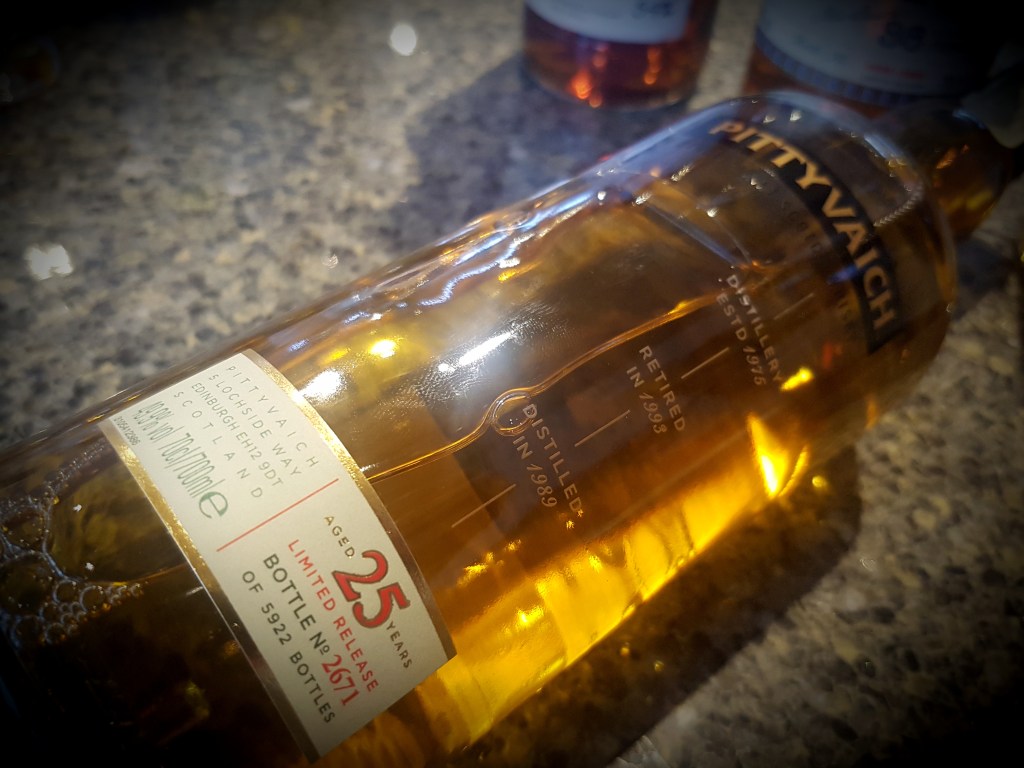
Pittyvaich 25 y.o. Review

Not a single tasting note on here for Pittyvaich? Pffft. In fairness, we’ve only had our grubby little paws on three of them locally, but that’s no excuse for delinquency in sharing the word on those we have tried. The goal is, after all, trying to maintain a broad horizontal swath of distillery notes for those who want to hear a bit about all of it. Not to mention…with an expression such as this – the Diageo special release from 2015 – there will undoubtedly be more folks interested than there would be for one of the OMC single casks or something.

Pittyvaich was founded in 1975, and produced for a mere 18 or so years, before being shuttered in 1993 and ultimately razed in 2002. It was a purpose-built distillery, meant to supply malt for the Bells blends. The distillery (and brand) changed hands in the mid-1980s, finding a new home in the ever expansive stables of, you guesses it, Diageo. The distillery (more an addendum to the Dufftown distillery than a true matter-of-fact distillery) somehow managed to fend off the mad rash of early ’80s closures, which sort of suggests that maybe Diageo was unwilling to concede that such a young and probably still immaculate facility should be surrendered less than a decade after what was almost certainly a substantial investment of capital to get it off the ground. By 1993, however, the writing was on the wall for Pittyvaich (and Rosebank, for that matter). The doors closed and stayed closed.

Fast forward a few years and the DRFSR at Diablo HQ saw the windfall potential in feathering out the remaining stocks from another lost distillery to the whisky cognoscenti. Albeit at greatly inflated prices from what this rather innocuous style of malt would have sold for in more sane and sober times. Such is. We whisky history buffs are always going to shell out a bit extra to taste the spirit of a bygone age, aren’t we?

Ultimately, though, this is a so-so malt from what was almost certainly just a so-so distillery. That’s my two cents, anyhow. 131 people on Whiskybase were more generous with their scores than I. Goes to show, this is all just one guy’s opinion, aye?

49.9% abv. Distilled in 1989, bottled in 2015. Refill Bourbon Hogsheads. 5,922 Bottles

Tasting Notes

Nose: Immediately one to only fall ‘in like’ with. Damp hay, with some notes of green tea. Herbaceous. Popcorn. Bittersweet chocolate. Clean malt. White flour and cereal tones. Some soft, almost unidentifiable fruits. Heavy cream on popsicles. Cedar.

Palate: Wine gums. Rather firm oak. Some odd sort of dental note (reminds of being in a dental clinic). More of those tea notes. Vanilla. Chardonnay. Ginger and white pepper. Grape skin tannins. Somewhat drying.

Finish: A little tired and lazy, if I’m being honest. A bit flat with no real standout notes that carry on.

Thoughts: I like it just fine, but wouldn’t go so far as to say I love it.

83/100

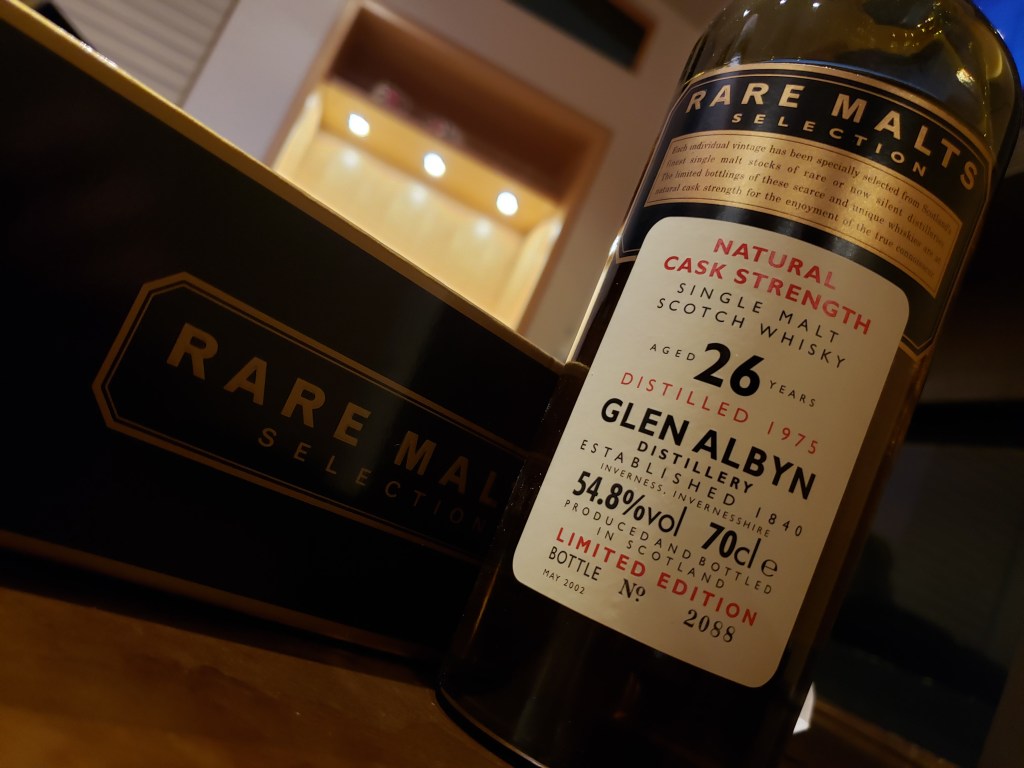
Glen Albyn 26 y.o. Rare Malts Review

Oh, man. What a spectacular surprise. This Rare Malts Glen Albyn was tasted as part of a spectacular range of expressions from closed distilleries and, I can’t lie, it wasn’t even remotely on my radar as one of the ones to look out for. It ended up being one of my favorites of the night.

Glen Albyn has become as scarce as sober uncles at backwoods barbecues these days. This is largely due to the fact that the distillery never really enjoyed much in the way of prestige and, in fact, there have only ever been a couple of official bottlings released. When you then consider the distillery was made redundant in 1983 as part of Diageo’s clean-up and downsizing, well…it’s not to hard to see why we’ve only had our hands on a few releases.

And if I’m being honest? This is the only one that has wowed me.

54.8% abv. Distilled in 1975, bottled in 2002. 6,000 bottles.

Sincere thanks to my mate Brett Tanaka for the opportunity to taste this. The range of bottles he’s been opening for what we’ll call ‘The Brett Sessions’ are simply beyond comprehension. And I am beyond humbled to be able to partake. I’ll be reviewing dozens of them in the coming weeks/months.

Tasting Notes

Nose: Smoke and char. Awww, hell yeah. This is right in my wheelhouse. Tangy fruit. Some great lime notes. Ammonia. Mocha. Savoury BBQ notes. Jolly Ranchers. More chocolate. Coal smoke. Some sort of insect repellent. A hint of Old Spice (yup…that Old Spice). Hardwood glue. Burnt plastic. Indian rubber ball. Mineral notes. Grilled tomato. Almost a grilled cheese (or cheese toastie) sort of funk. Brilliantly integrated, despite the disparate list of aromas.

Palate: Kerosene and burning leaves. Pepper. Bitter chocolate. Really fuel-ish, in such a profoundly cool way. An absolutely ancient style of malt. Melon rind. grapefruit and tangerine.

Finish: Kinda drying, actually. And bitters out a but in the end (grapefruit-like). All pleasant. And very long.

Thoughts: Splendid. Keen. Neato. Love it.

92.5/100