Category Archives: Whisky Reviews & Tasting Notes

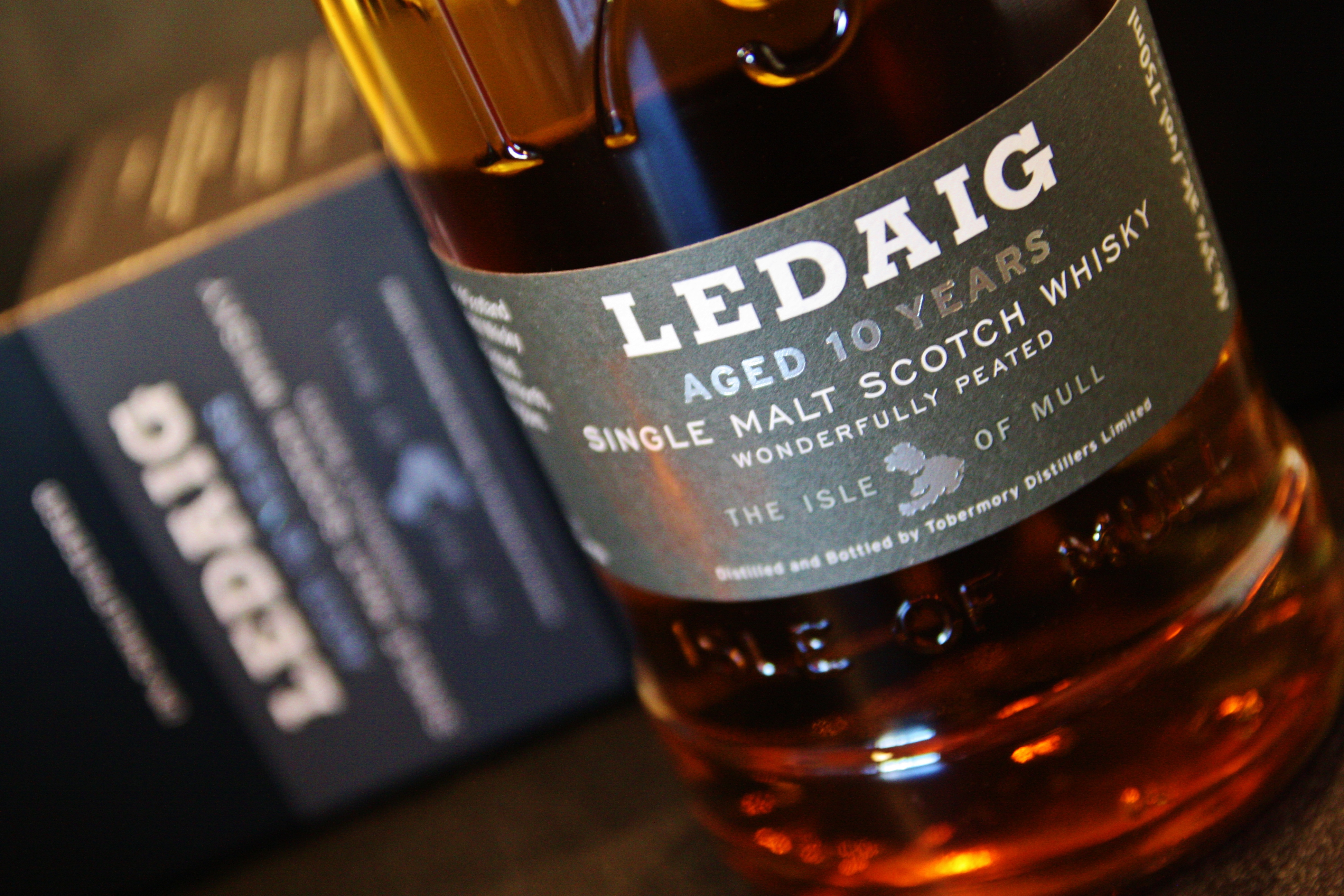
Ledaig 10 y.o. Review

Ledaig 10 y.o.068

46.3% abv

Score:  86/100


Peated malts are unquestionably the hallmark of Islay’s whisky trade.  They are what make the island famous and Scotch itself infamous.  But, of course, not all peated malts are from Islay.  A lot of Scotland’s distilleries have been investing substantial efforts for years now into investigating the effects of peat on their respective spirits.  The sad fact of the matter is that ultimately many of the mainland’s peated malts are less than stellar examples of the style.

Ledaig, however, is nae from the mainland.  It’s a single malt from the Tobermory distillery on the Hebridean Isle of Mull, just a short Northerly hop from Islay.  A fairly sound leap of logic might suggest the peat make-up between the two islands would be quite similar.  But would that give the whiskies a common ground (pun intended)?  We’ll get there in a minute.

Tobermory the distillery was founded in Tobermory the village in 1798.  At the time it was producing under the name of Ledaig, and only adopted the village name for its own appellation circa 1978 with another change of ownership and after some seriously long and silent years.  Today the distillery is healthy and flowing, steadily producing its namesake malt (Tobermory, that is) for a good portion of the year and a moderately peated version called Ledaig (“Le-cheg”, for those more phonetically inclined) for the remainder.  The Malt Madness website refers back to the Malt Whisky Yearbook putting this split at about 50-50 in terms of production time.  A hefty portion of each distillate, however, is relegated to the murk of blending waters.

Ledaig 10 is a bit of an oddball.  In many ways it is close to an Islay malt, but maybe like one that has been maturing away in oil drums in a shopyard or something.  Its personal appeal is probably rooted in a mix of affinity for a familiar style of peat and an appreciation for an utterly unique profile.  Those looking for a more ‘smooth’ style of single malt may want to look elsewhere.  This is, however, a hell of a variant on peated whisky and certainly one that belongs in the canon.

And just for shits and giggles, can I point out that there’s a wee hamlet on the Isle Of Mull – maybe 7 or 8 miles from the village of Tobermory – by the name of Calgary?  That pastoral setting was actually the root source for the name of this bustling Canadian metropolis I now call home.  Cool stuff.

Oh yeah…Ledaig, if you’re curious, is Gaelic for ‘safe haven’, and in this guy’s humble opinion a much better name than Tobermory (itself a reference to ‘Mary’s well’).

Nose:  Smells young-ish.  A fairly up front hit of diesel and hot rubber.  Peat and smoke.  Seashore saltiness and fresh pepper.  Quite dry and ashy.  A very charred meat backbone.  Some grainy notes.  A hint of wine and burnt lemon peel.  Linseed oil and smoked tea.  A farmy aroma that reminds of the coastal farmlands on Islay.  This is an almost industrial smelling dram, and it actually rather appeals to me for that.

Palate:  Arrives rather feistily (is that a word?).  Billowy smoke.  Fennel.  Oily and salty.  Rather sweeter than expected, with some apple notes.  Like cut apple with a squeeze of lemon juice (as we’re wont to do to keep it from browning).  Grassy and grainy too.  Or maybe that’s more like a tea note.  Assertive and unique.

Thoughts:  Probably not for everyone (not even all the peat lovers), but it works for me.  And it may just be the power of suggestion (both being Burn Stewart malts and all), but this does remind a bit of young peated Bunnahabhain.


– Reviewed by:  Curt

– Photo:  Curt
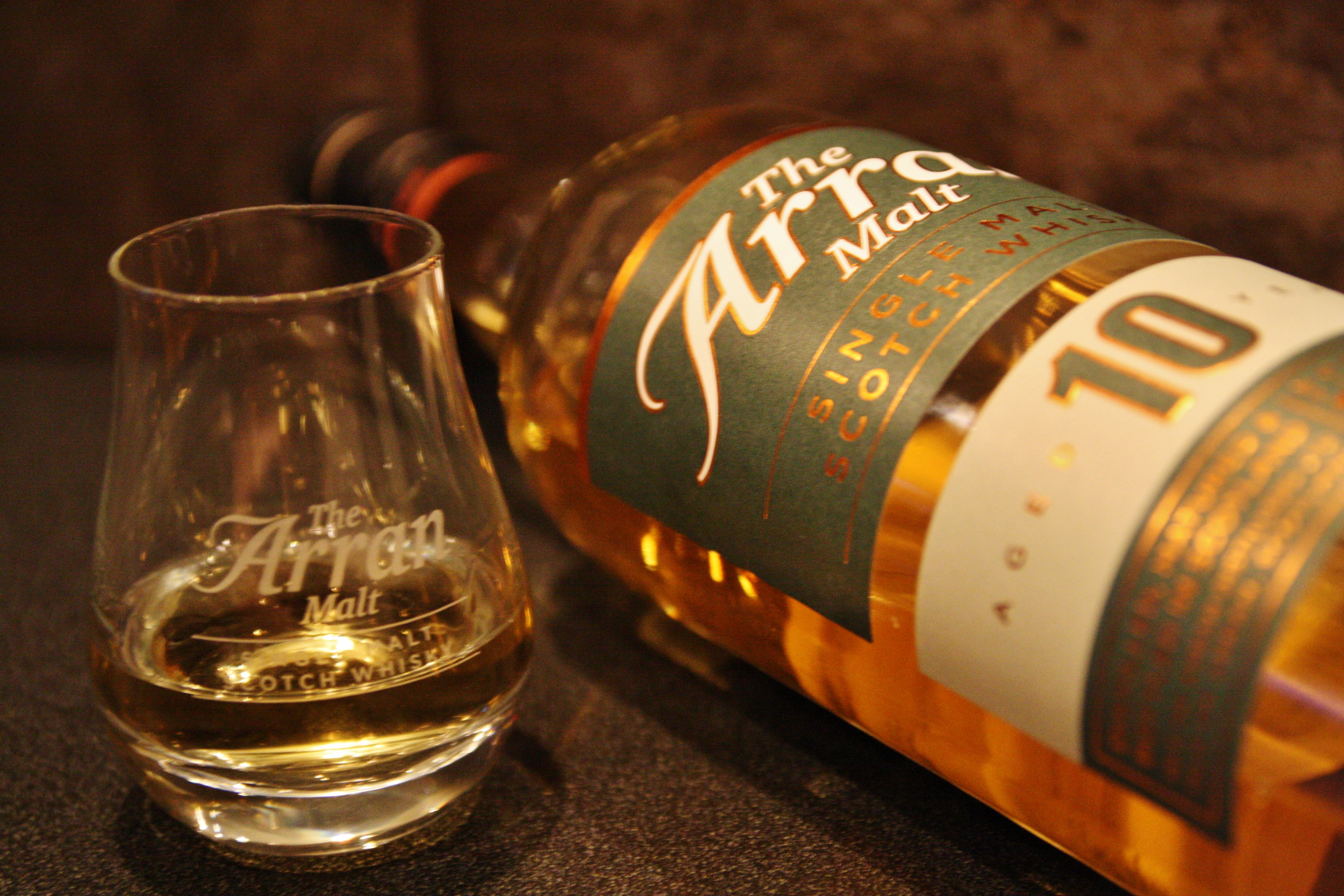
Arran 10 y.o. Review

Arran 10 y.o.026

46% abv

Score:  86.5/100


I took a flier on this one.  It’s not very often I buy whiskies this young anymore, but from time to time I need to inject a little perspective into the site beyond the often high end whiskies I am fortunate enough to try.  I tend to practically leap at any opportunity to taste and write-up some of the more ‘entry level’ offerings.  And $50 for an age-stated, unfiltered 46% malt is not a bad deal anyway.  This bargain was sweetened up a little more with the addition of a couple of bespoke tasting glasses snugged into the grossly oversized box that this bottle came in.  Neat little glasses too, but that’s incidental to what we’re here for.

Arran has really come into its own in the past couple of years.  The distillery now has a house style, a mature range of malts and a reputation that gets better by the day.  For a while I was nervous that they seemed to be more interested in novelty releases and odd finishes than in just turning out true ‘stand-the-test-of-time’ Scotch whisky, but they’ve managed to put my mind at ease and turn out a few back to basics releases that are truly of world class calibre.  I think I’ve said it here before: I can’t wait to try Arran at 25 or 30 years on.

But let’s forget the old and expensive for now and raise a glass (well…another one anyway) to finding a real gem in the lower rungs of the pricing ladder.  I can’t even pretend to not be excited about this one.  It’s a rare treat to find such an appealing young unpeated dram.  It’s a great showing for Arran and bodes extremely well for the future of this still fledgling distillery.  I think this may well be one of my favorite young whiskies now.  Easy and appealing.

Seems a good time to grab a few before the price goes up or the quality drops.

Nose:  Lovely nose.  Light and fruity.  Soft and creamy…like a banana cream pie.  Sweet and incredibly appealing.  Some black currents, ginger and a dusting of old pepper (none too fragrant).  Orange and apple.  A little bit of white chocolate.  Chewy fruit candies.  Apple and plum skins.  Can’t over how soft and custardy the nose is.

Palate:  Not as spectacular as the nose, but solid…very solid.  Some softly herbal Sauvignon Blanc notes.  Orange again.  Creamy with some nice spice notes.  A squeeze of lemon.  Some sort of pudding.  Bread pudding, maybe.  Quite some zip and zing here…really gets the tastebuds singing.  Could be an almost light fudgy note too.  And a little oak.

Thoughts:  If only the palate could stop stepping on the toes of the nose…this would be a real showstopper.  As it stands, still a brilliant example of entry level whisky.


– Reviewed by:  Curt

– Photo:  Curt

Hazelburn Rundlets & Kilderkins 10 y.o. Review

Hazelburn Rundlets & Kilderkins 10 y.o.052

50.1% abv

Score:  86/100


This is one of the beefiest Hazelburns you’re likely to encounter.  Not just because of the cask strength presentation (actually only about 4% higher than most other standard Hazelburn editions), but because there is something raw and back-to-the-earth about it.  This is tradition, harnessed and yoked and being willfully pulled along in the new age (against the protestations of the groaning old Victorian machinery that provides the heartbeat of this brilliant distillery).  Such is the lifeblood of the Springbank distillery where Hazelburn is produced, and such is the true allure for the whisky aficionado.

To be honest, as a brand Hazelburn is far less exciting to me than the other lines running off the stills at Springbank, but that’s not to say the quality is in any way subpar.  The distillery simply produces a style of malt that is very amenable to the influence of peat, and when that element is no longer a part of the equation it somehow seems to sum up to less than a whole. This is, I concede, a personal bias based on relative experience.

The ‘rundlets’ and ‘kilderkins’ from which this age-stated malt takes its name are small, lesser known barrel sizes historically used in the maturation of ales, wines and whiskies.  To put it in a contemporary context, this is a similar enterprise to what Laphroaig does with their Quarter Casking.  The use of smaller barrels equates to greater wood spirit/wood interplay, which results in accelerated maturation.  Makes sense.  And to give credit where credit is due…with a novel marketing angle such as this at their disposal it’s a credit to Springbank that they maintained an age statement when I think many of their contemporaries would have launched this as an NAS expression.

Nose:  Very naked.  Dusty grains.  Vanilla.  Earthy notes and rye bread.  Some very farmy notes that remind of being near a grain mill.  Still a faint touch of peat, irrespective of the ‘non-peated’ angle.  Probably simply cask leeching from barrels previously used for Springbank or Longrow distillate.  Dark chocolate.  Some nice gentle spices.

Palate:  Spicy, peppery arrival.  Bolder than expected, to be honest (in a good way!).  The grains and wood are very much at the fore here.  And very clean, I should add.  Some leather.  Again…slightly earthy.  Maybe a touch of anise.  Grape skins.

Thoughts:  Clean, nice and flawless, but sort of…well…tough to get excited about this one.  My mind immediately hearkens to what this could have been as a Springbank or Longrow.  Unfair of me, I know, but true.  A nice variation on a theme, even though I think I still prefer the 12 year old.


– Reviewed by:  Curt

– Photo:  Curt

Springbank 25 y.o. (2014) Review

Springbank 25 y.o. (2014)041

46% abv

Score:  87/100


This is a perfect whisky to use as a model in illustrating the current state of single malt Scotch and talk about the ongoing allegations of declining quality and inconsistent brand releases.

Before we get started, let me offer up a word of clarification to temper the immediate assumptions that could be drawn from that first paragraph.  This is still pretty darn good whisky in its own right.  It’s not spectacular – especially at the $700ca mark – but it is a solid offering that is somewhat consistent with the distillery’s style.  Ok so far?  Alright…moving on…

This is 2014’s edition of Springbank’s quarter century milestone malt.  The last version of this whisky I tried (and the only one I know of, to be honest) was the 2006 release.  I loved that malt.  It wasn’t without its flaws, but it was singular and suited my palate perfectly.  Again, a pricey affair, but the rewards were tangible, if maybe not entirely in line with the outlay of benjamins required to score one.  What we have 8 years on is a mere shadow of this once princely dram.  Actually that’s not entirely accurate, as it sort of implies that the basic outline is the same as the old edition.  This is an entirely different whisky which, in my opinion, shouldn’t be this different from its forebears.  The reasons though, are likely very easily explainable.

The story, I would imagine, goes something like this:  In days gone by (let’s say up until about a decade or so ago) distilleries were producing distillate at a steady clip, filling and maturing barrels and feathering out releases with a regularity that cantered along nicely about in line with the rate of consumption.  Perhaps they were even able to put aside a little extra to gather dust in the furthest corners of the old warehouses.  When it came time to marry barrels together for the next batch of whichever edition was going to market, the ‘nose that knows’ at the distillery (read: master blender, or whatever title they’d claim) would have a decently stocked warehouse from which to pull casks.  Think of it much like a painter having a broad swath of colours on his palette.  Casks would be selected that aligned with the age they were aiming for and if the end product was not quite as glittery as hoped for, these vattings would be sweetened up with a few of the older, more spectacular barrels in bond.  Ergo, your ’18 year old’ whisky was quite likely built upon a fair bit of true 18 year old spirit, but with a decent amount of older and better whiskies mixed in there too.

I am, of course, simplifying things, but you get the idea as to how this relates back to an age where demand hadn’t yet outstripped supply.  Nowadays, in this burgeoning whisky market, distillers struggle just to reach status quo.  Hence the rise of the dreaded NAS malts.  I can almost guarantee that your current ’18 year old’ is just that.  I think you’d be lucky if it was 18 and a day.  You can call this a leap of logic, but it’s an easy inference, considering all of the evidence that has piled up as we’ve watched the times a changin’ for the last half decade or so.

Coming full circle to this Springbank 25 now, it, much like its younger siblings the 21 and 18, has become sadly almost entirely devoid of all the deeper subtle waxy notes, soft fruits and almost tropical nuances that made very mature Springbank a true revelation for many of us.  Its unique profile has been replaced with a more generic – albeit not bad – caramel-y simplicity.  All I can say at this point is…I guess it was inevitable.  Doesn’t make it any easier to swallow though (pun intended).

Nose:  Creamy caramel notes arrive first, then ebb, then return later.  Definitely not as fruity as I’d hoped for.  Smoke and peat are faded and subtle.  Some orange (and maybe other citrus hints?) and leather.  Orange candy.  Decent spice pantry notes, predominantly of the allspice kind of aroma.  Nice, but not overly special.

Palate:  Very nice arrival to get things going.  Hints of smoke and peat, as we’d expect, and an earthy or farmy backdrop.  Over time some sweet, artificial fruit notes emerge.  Leather.  Dried fruits.  Some coffee.  And more of those candy notes again.

Thoughts:  I think I said it all above.


– Reviewed by:  Curt

– Photo:  Curt

Laphroaig 1996 17 y.o. Cask #8519 (Signatory) Review

Laphroaig 1996 17 y.o. Cask #8519 (Signatory)052

50.7% abv

Score:  89.5/100


Back to the bog.  Let’s dig in for a quirky one-off from Signatory.  This one is well worth spending a little time with – and sharing the word on – simply due to its ‘against the grain’ nature and contrary personality.

I think I might actually be hard-pressed to say this was a Laphroaig if I had to taste it blindly.  There’s a hint or two of its lineage, of course, but it’s almost like Hugo Weaving in ‘V For Vendetta’.  You know he’s the voice behind the mask (how could you miss that timbre?), but it’s not a sure thing unless you actually see the actor behind the costume.  This Signatory indie is a Laphroaig dressed up like an Ardbeg.  Or something like that anyway.  That’s about the closest I can come to putting my finger on it.

I knew I had to review this one as soon as I tried it, as this is a perfect example of why independently bottled whiskies are so much fun.  Here we end up with a dram that is like nothing the distillery releases in its standard range.  It’s bottled at high strength, unfiltered and with all pertinent info front and center.  Beautiful.  And of course it doesn’t hurt that the spirit is a clean and vibrant little gem in its own inherent right.

I do want to note that this is one naked-ass Laphroaig.  17 years in a hoggy have barely imparted more than a tinge of color, and the phenols seem to have been barely restrained by wood.  This is an unbroken stallion of a malt.  Wild and unchecked.  If I had to guess, this was matured in a tight-grained second or third fill barrel.  And I am not disappointed by that in the least.  The smoky and peaty spirit shines bright and centerstage.  Fans of big peaty whiskies will be in for a real treat here, as this one brings a phenolic edge you usually only find in young Islay malts but rounds it out with some soft mature nuances.

Nose:  Predictably Islay and awesome.  Lemon and lime.  Seashore (wet rock, ocean breeze and salt water).  Licorice.  Smoke and earthy, medicinal peat.  Soft melon notes and chewy candy.  A slight BBQ note.  Vanilla cream over soft fruits.  Reminds just a wee little bit of Ardbeg Auriverdes.

Palate:  Big licorice-rich delivery.  Into juicy stone fruit, then billows of smoke.  Awwww, yeah!  Flinty and briny.  Cracked pepper.  Black ju-jubes.  Green apple and mouthfuls of moist dirt.  Ginger.  Bitter, bitter dark chocolate (like 90+% cacao!) and strong espresso.  Some oat or grain at the back end, before it fades right back into apple skins again.

Thoughts:  Somewhere in between an Ardbeg and a Laphroaig.


– Reviewed by:  Curt

– Photo:  Curt
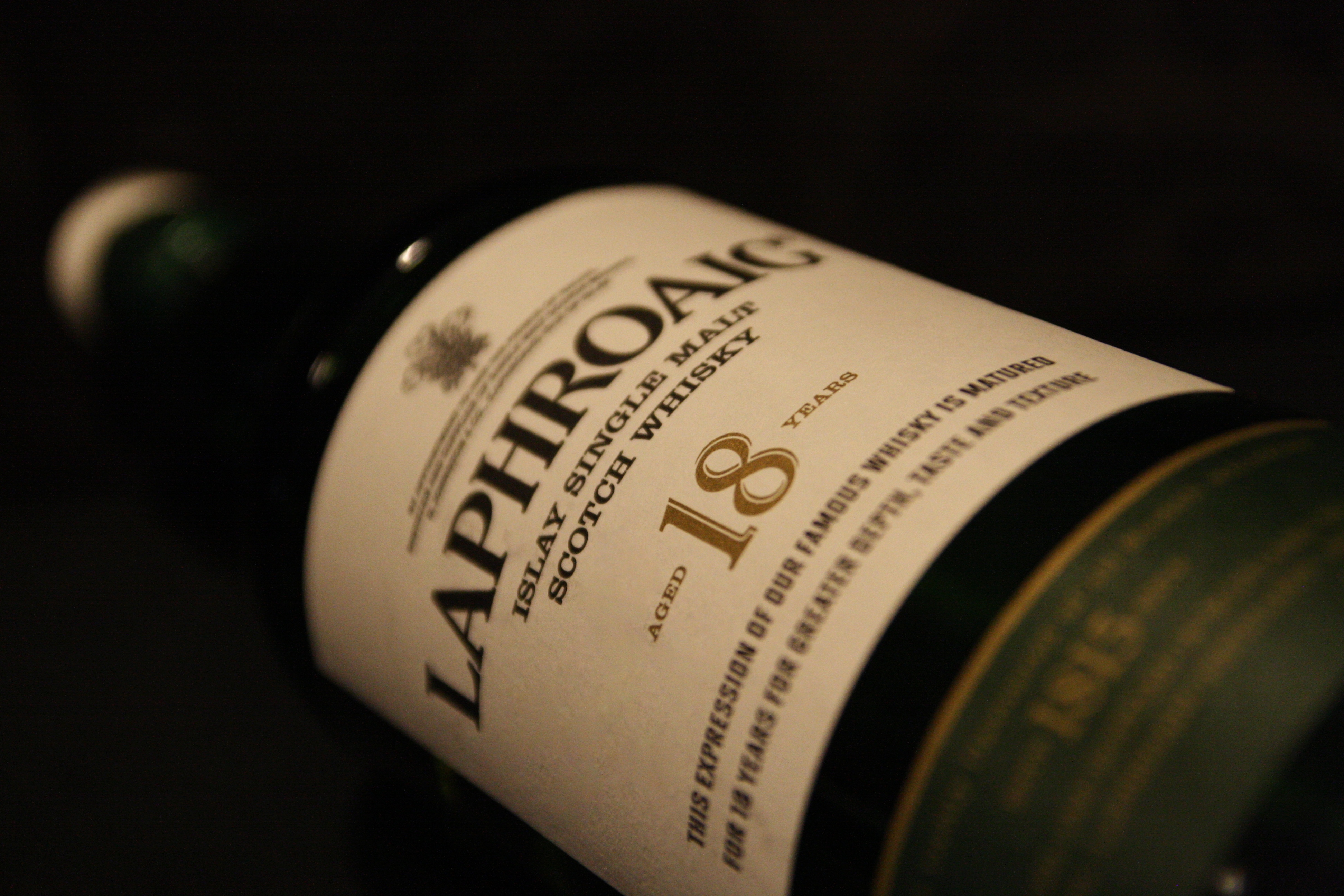
Springbank 17 y.o. Sherry Wood Review

022Springbank 17 y.o. Sherry Wood

52.3% abv

Score:  89.5/100


The old school charm of the malty and moderately-peated Springbank spirit meets the dense, dark punchbowl of heavy sherry.  The result is exactly what you’d expect.  Or exactly what I expected anyway: an almost oily, industrial smoky canvas with splashes of vibrant red and purple fruits thrown all over it.

Springbank has always used a substantial amount of sherry barrels in the maturation of its iconic single malts.  The sherry brings a sweet edge and tempers the more organic heft that comes from the phenolic influence of the peating process.  Don’t get me wrong, though, Springbank malts (excepting Longrow) are no peat monsters and temperance is not necessarily needed.  It’s merely a twist to the tale.  Smoke is integral, but it’s not the ‘be all, end all’ for Springbank.  In fact, I’ve heard the distillery’s peating specs to be anywhere from 8-20 ppm, so as you can imagine this would be a bit of a featherweight when held up against some of the Islay malts from the Kildalton region.

But in this case the sherry notes are not merely a softening tool, but the entire raison d’etre.  And it all works beautifully.  I fell for this one at a festival the first time it was poured for me.  It shone like a beacon against some of the rather dull and typical festival fare.  And while it didn’t resonate quite as strongly when lined up against some beautiful old editions of SB21 and SB25 in a recent tasting we did here, it still more than held its own.  A lovely whisky that brings a whole new dimension to the cabinet.  Hopefully Springbank elects to make this a more readily available bottling, and not simply a one-off.  I can see this one being in very regular rotation if that ever happens.

Nose:  Sweet and creamy.  Roman nougat.  Lush and fruity.  Deep sherry, as we’d expect.  Dark cherry and plum.  Dried cranberries, fresh out of the package.  Oily smoke.  Orange.  Pepper.  Earthy and organic.  Kinda farmy and slightly peaty.  A faint rubber note too.

Palate:  Oily.  Big viscous arrival.  Pepper and peat and bucketloads of dark, dried fruity notes.  Again, I’d use the word ‘lush’.  Malt and hints of coffee.  Leather saddles.  Licorice.  A coastal saltiness about it as well.

Thoughts:  I keep thinking there may be just the vaguest note of sulphur flitting around in there, but when I try to nail it down, I can’t.  So let’s just say this one is clean.  Either way…love it.


– Reviewed by:  Curt

– Photo:  Curt
Roughstock Black Label Montana Whiskey Review

Roughstock Black Label Montana Whiskey053

64.1% abv

Score:  90/100


It’s very rare that I find myself at a loss for words, but it’s taken me a really long time to come to grips with this one.  I don’t know how I can possibly convince you that a two year old whiskey from Montana can be as good as this is.  Not kidding.  Two!

Bozeman, Montana’s Roughstock Distillery is the party responsible for this young American single malt, and man, what a credit to have in their portfolio.  Black Label (not to be confused with the Johnnie Walker blend under the same appellation) is a single barrel release of what they refer to as ‘Western style’ whiskey, and is served up at an ungodly 64.1% abv.  The casks selected to be bottled under this label are chosen for their intrinsic character and high standards of quality, above and beyond what the average Roughstock cask can boast.  In other words:  “We cherry picked the best and want you to be able to see what we’re capable of.”  Granted you pay a high price point for this young’un, but it does certainly net you a good return for your dollars.  The Roughstock website refers to this expression as “untouched: uncut, unfiltered, and unadulterated”.  These cowboys sure know how to sweet talk, huh?

This particular batch that we’re speaking to at the moment comes from cask #86, distilled on 02.08.11 and bottled on 03.21.13.  That’s about 25 months of courtship between the spirit and the fresh oak.  Incredible.  I have trouble simply wrapping my head around the integration, subtlety (in spite of the high-test abv!) and polished nature of the spirit these guys have managed to create in such a short time.  Expect a malt that tastes years older than the dates belie; has all the hallmarks of good single malt; and is presented in all its naked glory.

This is, quite frankly, stunning whiskey.  Hats off and a well-earned score for the Roughstock crew.  Can’t wait to try more from these guys.

Nose:  Oh, wow.  Like a dry brushfire.  Creamy caramel and toffee (that grow with time in the glass).  Butter tarts and raw pastry (salty dough).  Dark fruits and pepper.  Cinnamon and other spices.  Orange, apple and pear.  A slight char, smoky edge.

Palate:  A little more youth showing here, but it’s still not a ‘young’ whisky.  Wow!  Toasted oak.  Apple skins, ginger, pepper and sharp clove or cinnamon.  Moist dried fruit.  Burnt sugars or very dark caramel.  A note of what I imagine to be bruleed orange peel.  Long finish on green apple skins and oak notes.

Thoughts:  This is ‘manly’ whiskey that would appeal to a lot of the men and women I know.  Over a hundred bucks a bottle, but I would buy this again anytime.

– Reviewed by:  Curt

– Photo:  Curt

Port Ellen 14th Release Review

Port Ellen 14th Release039

56.5% abv

Score:  93/100


Port Ellen.  The magic, the allure, the mystique.  You’ve heard it all before, so I’ll refrain from the poetics.  Suffice it to say that this is a very special whisky, and I’m pretty tickled just to be able to try it, irrespective of what sort of score we ultimately weigh in with.  This is the 14th official release from Diageo and the oldest Port Ellen I’ve tried so far.  Distilled in ’78 – five years before the closure of the distillery – and bottled in 2014.  A 35 year old dram that still boasts an impressive 56.5% abv.  I think even the angel’s relinquished their share on this one in order to leave more for the rest of us.  How else explain such an impressive bottling strength at this age?  Perhaps they, like many of us, were simply priced out of the running.  As you can imagine, a whisky like this does not come cheap.

But taking price out of the equation for a moment or two (as much as possible, anyway), I have to admit that this is still a knockout dram.  It’s not the best I’ve tried from Port Ellen, but it’s a stunner for sure.  Elegant and exceptionally composed.  Big and bruising, to be sure, but a gentle giant in many ways.  I’m particularly warm to the softer, creamier side to this and the way it plays against the earthy back-to-nature smokiness.  Sort of akin to the smell of fresh baking in an old home where a fire is crackling away on the hearth, and letting off the occasional drift of comfortable smoke.  Beautiful interplay.

This is a hell of a malt, but it will run you about a bajillion dollars if you want to own one yourself.

Nose:  Again…an incredibly soft Port Ellen.  Pear notes, with a slightly melon-ish background.
A touch of sweet cherry.  Dusty and mature, yet very, very vibrant.  Slight farmy, peaty note.  Earthy and organic.  Leather.  Reminds of forest trail hiking.  Seabreeze and salt water.  Fruit flan.  Both grapefruit and lemon.  The smoke builds over time.  Black and green ju-jubes.  Vanilla.  Lemon polish.  Pepper.  Some rubber and a touch of liquid smoke; works out to be an almost industrial aroma.  Far more creamy and custardy than I had presupposed.  Kinda doughy.  Nice oak spine.  Another classic PE nose.

Palate:  Oh, wow.  Great thick, oily delivery.  Sort of reminds me of old Lagavulin on the palate.  Ginger and spice.  Licorice.  Actually, a lot of licorice.  Smoke and peat, as we’d expect.  Citrus rind and pith again.  Our favorite Lapsang Souchong tea.  Tangy fruit notes (but which ones?!).  Overcooked sugar cookies.  Dark, fresh vanilla and strong oak.  Notes of the raw, smoked malt.  Spiced dough…raw.  Slightly tannic.  A long finish of granny smith apple.  Again…absolutely typical.  About on par with the 13th release in terms of quality (hard to pick a favorite), but definitely a different profile.

Thoughts:  A great Port Ellen.  Not the best I’ve tried, but definitely a ‘form’ (if you’re up on your Plato, that is).  While we all understand the laws of supply and demand, Diageo has moved beyond the ridiculous and into the ludicrous with this pricing scheme.  Insanity.  Give or take $4,000 a bottle.  Oy vey!

*( Originally tasted on the back of a very small sample brought to me by my whisky angel, Val Bradshaw.  Subsequently retasted in Jan, 2016.  Notes expanded.)


– Reviewed by:  Curt

– Photo:  Curt


Laphroaig 18 (2014) Review

Laphroaig 18 (2014)047

48% abv

Score:  91/100


Time to revisit an old favorite.  Coming back to this one feels just as comforting and welcome as picking up the phone and talking to an old friend I haven’t seen in years.  Nothing but good memories, nostalgic reflections and the pleasure of returning to something well-loved.

I recently had a chat with a friend on Islay and mentioned I had had to postpone this year’s trip out to my Hebridean home away from home.  He struck a chord when he said “you just need to stick your nose in a glass and it will bring you to Islay.”  If you’ve ever visited the island you’ll feel the truth in this sentiment.  And more than likely feel the same sense of longing to be back that plagues me between trips over.

But enough of that romantic drivel for now.  Let’s just be grateful to check out the new(ish) Laphroaig 18.  This is the white-tinned one; no longer the dark green packaging.  The true question at heart is whether or not the whisky itself has changed in parallel with the aesthetic rebranding.  A collective (and cultivated) cynicism has us somewhat fearful of changes to these old favorites, of which we are fiercely protective.  This cynicism, unfortunately, is firmly rooted in historical precedent in this, the age of declining stocks (or so we’re told) and soaring prices.  But optimism has its place too, so let’s nae get bogged down in the dirges.  Fingers crossed.  Hoping for the best.  And…

…amply rewarded!  Whew.

Nose:  A squeeze of lime.  Smoke, but from a distance.  Peat, but faded.  A hint of anise.  Oysters on the shell.  Coastal air and seaspray.  A touch of vanilla.  Some orange oil.  Keylime pie, pastry and all.  A dusting of dry pepper.  And a sweet, overarching candy note.

Palate:  Orange again.  Or rather, orange rind.  Earthy peat.  Mild black licorice.  Flinty notes.  Smoke and ash.  Solid oaky backbone without being heavy-handed.  A little grapefruit pith.  Salt water.  A nice juicy, plummy note at the end.

Thoughts:  Just as lovely as I recall.  Still a whisky built on smoked fruit and subtleties.  The rebranding seems nothing more than aesthetic fiddling.  Relieved to find this is the same ol’ balancing act of peat and sweet.  Beautiful.


– Reviewed by:  Curt

– Photo:  Curt

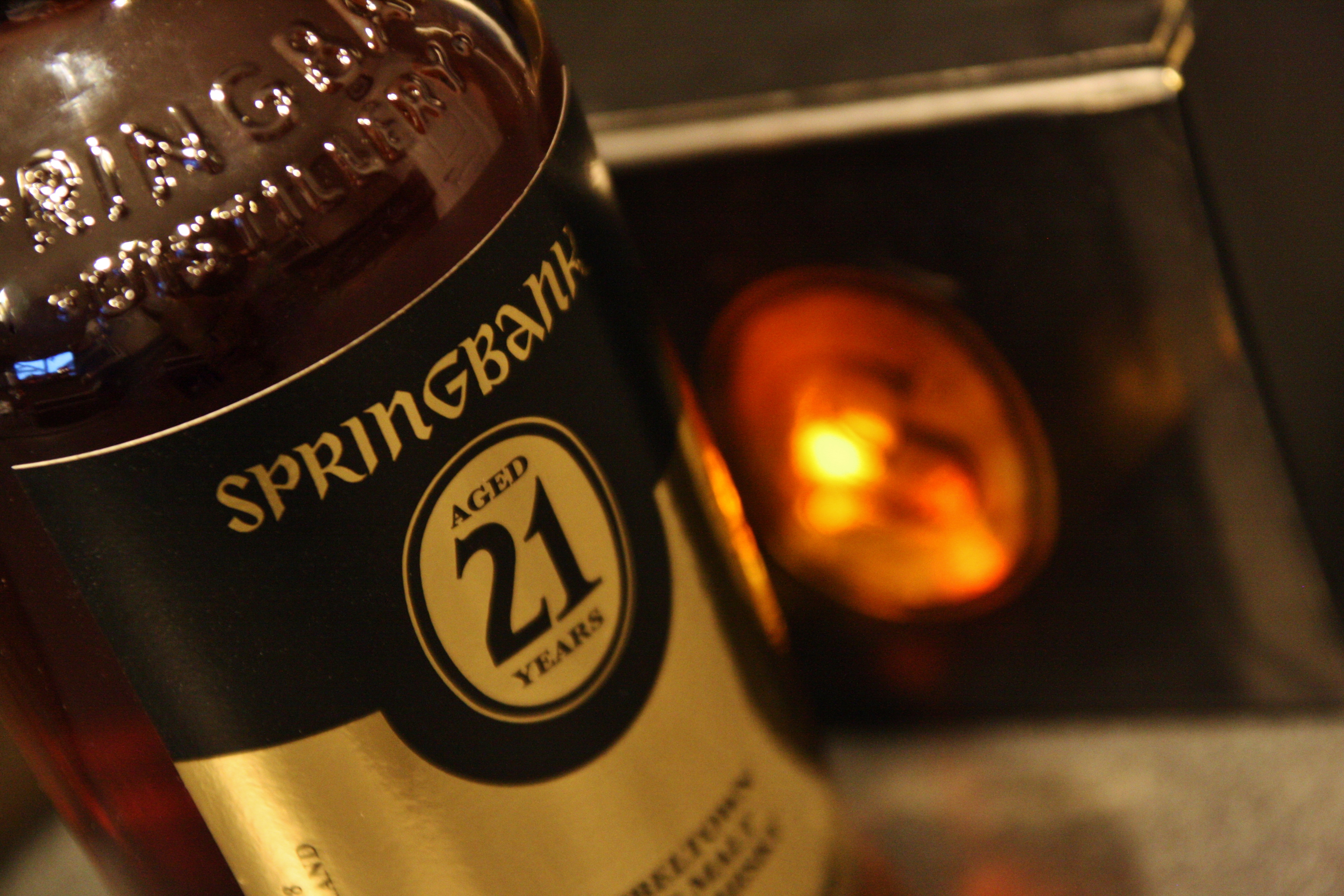
Springbank 21 (2013) Review

Springbank 21 (2013)074

46% abv

Score:  88.5/100


A few years back (2005, to be precise), the good folks at Springbank released a very special 21 year old single malt.  That dram is still one of the 50 or so whiskies that make up my all time top 10 list.  😉  And while that early incarnation of the official 21 may not have initially arrived on the scene with trumpets and fanfare, it was soon heralded as the revelation it truly was.

Fast forward to the present day and we have finally been blessed with a few additional versions of this iconic expression.  Nowadays these 21s (and even a new 25!) have been hitting the market with annual regularity.  This is great news for whisky lovers, as for several years the ‘official’ story (unofficially) was that Springbank had simply exhausted their stores of older casks.  That we now have these sassy gold boxes in hand speaks volumes for Springbank’s careful cask management and current eye to maturing stocks.  Good recovery, folks.

For today’s purposes, though, we’re looking at the 2013 edition.  Let’s check in on what we have now compared to that glorious aforementioned old-enough-to-drink-itself expression.

Hmmm…immediately cause for reflection.  This is definitely not the SB21 I know and love.  It is still somewhat recognizable as a Springbank, but if poured for me blindly…I’m not sure I’d correctly identify it as coming from Campbeltown.  The only true hint is the DNA of farm and lower mid range peat.  It’s not that it veers far from the distillery character, but it definitely plays a little standoff-ish and restrained.  I like this one, but I certainly don’t love it.  Oh well.  Kinda shores up suspicions I had that the 2005 edition was likely built with some casks older than 21 years.

Nose:  Very soft right off.  Fruit flan.  Melon (honeydew and overripe cantaloupe).  Faint smoke, but it’s more like charred wood than peat smoke.  Some polish.  Hay and floral notes.  Oak.  Maybe a touch of creamy chocolate and faint whiffs of leather.  Turkish delight too perhaps?

Palate:  Quite juicy at first.  Slightly tannic as it develops, hinting at the depth of sherry influence.  Waxy and oaky.  Fruity still, but not as soft as the nose; leaning more to dried fruits.  A little bit of bitter almond.  Now we have a hint of peat.  Orange peel and licorice.  Oak is fairly forward.

Thoughts:  A far cry from the glorious older edition of Springbank 21 (2005), but still good.  The sweet and lowdown though…no way in hell is this worth the ~$350ca it will set you back.  Oh yeah…almost forgot…the Golden Girls called…they want their gold lamé back.  This is some gaudy awful packaging.


– Reviewed by:  Curt

– Photo:  Curt